Contact Number: +86 4006234566




A polished rendering and a low quotation are not enough to prove that an indoor playground supplier can deliver a safe, durable commercial project. Before paying a deposit, verify the factory, legal entity, material specifications, safety documents, delivery process and after-sales system.
This is especially important for an international order. Once production begins, correcting the wrong specifications or replacing an unreliable supplier becomes expensive. A few careful checks before payment can prevent months of delay, repair costs and opening problems.
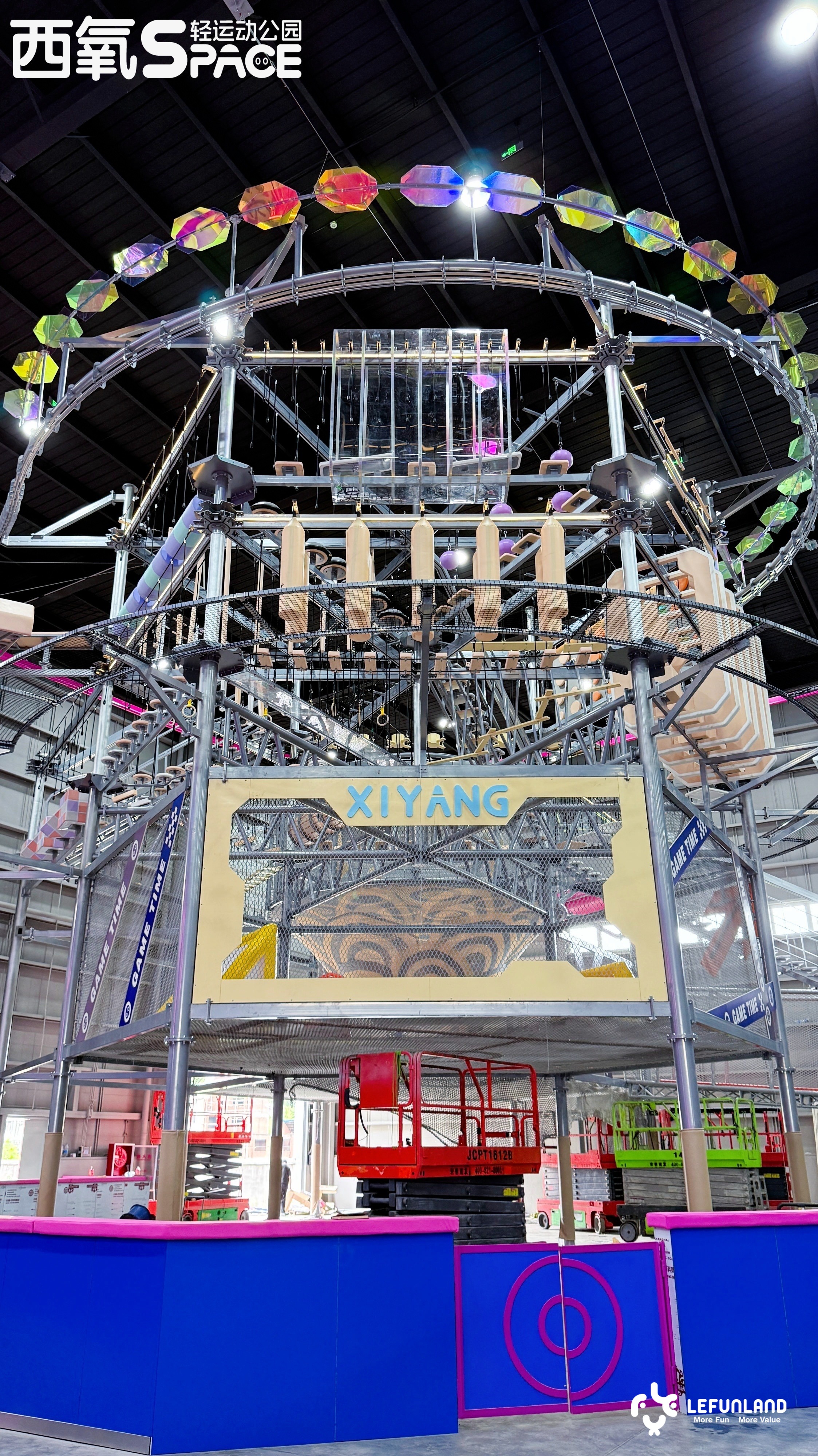
A completed custom indoor playground project delivered for an international FEC.
Factory photographs can be copied, staged or several years old. Ask for a live or recently recorded walkthrough that starts at the company entrance and continues through material storage, steel fabrication, soft-padding production, trial assembly, inspection and packing.
The supplier should be able to show how a project moves through production rather than only presenting a finished showroom. During the walkthrough, ask questions about the equipment currently being assembled. A real production team should be able to explain the structure, materials, connection method and inspection process without giving only general sales answers.
Cross-check the company name and address shown on the quotation, contract, invoice, test reports and payment instructions. If several unrelated company names appear, ask for a clear explanation before transferring money.
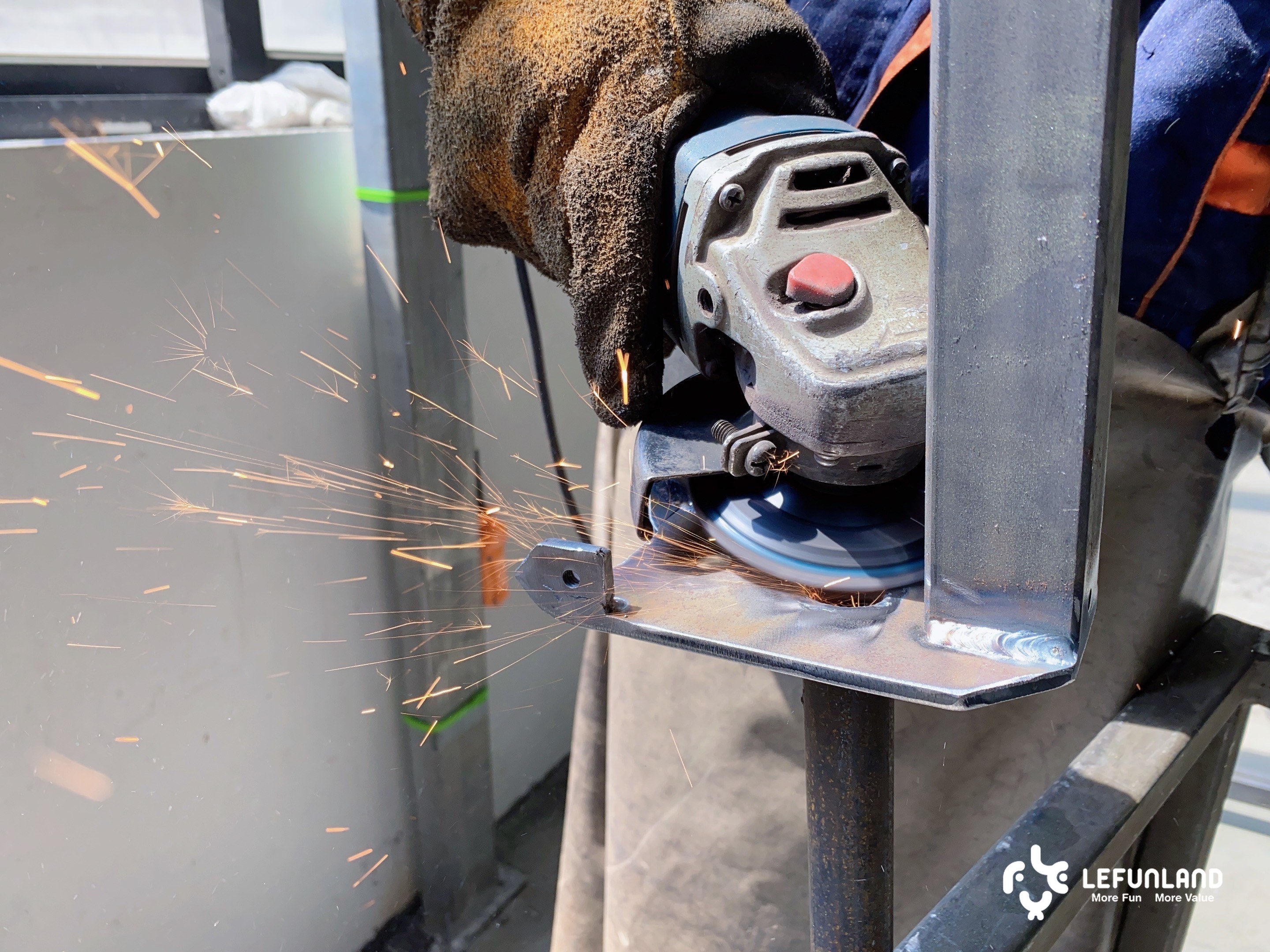
Factory trial assembly and quality inspection before equipment ships.
Words such as “commercial grade,” “high quality” and “premium material” are not specifications. Ask for numbers, material types and construction methods.
Important items include:
These details affect stability, impact protection, wear, noise, maintenance and service life. Two renderings can look almost identical while the equipment behind them is very different. Buyers should compare what is actually included in the equipment quote, not only the final price.
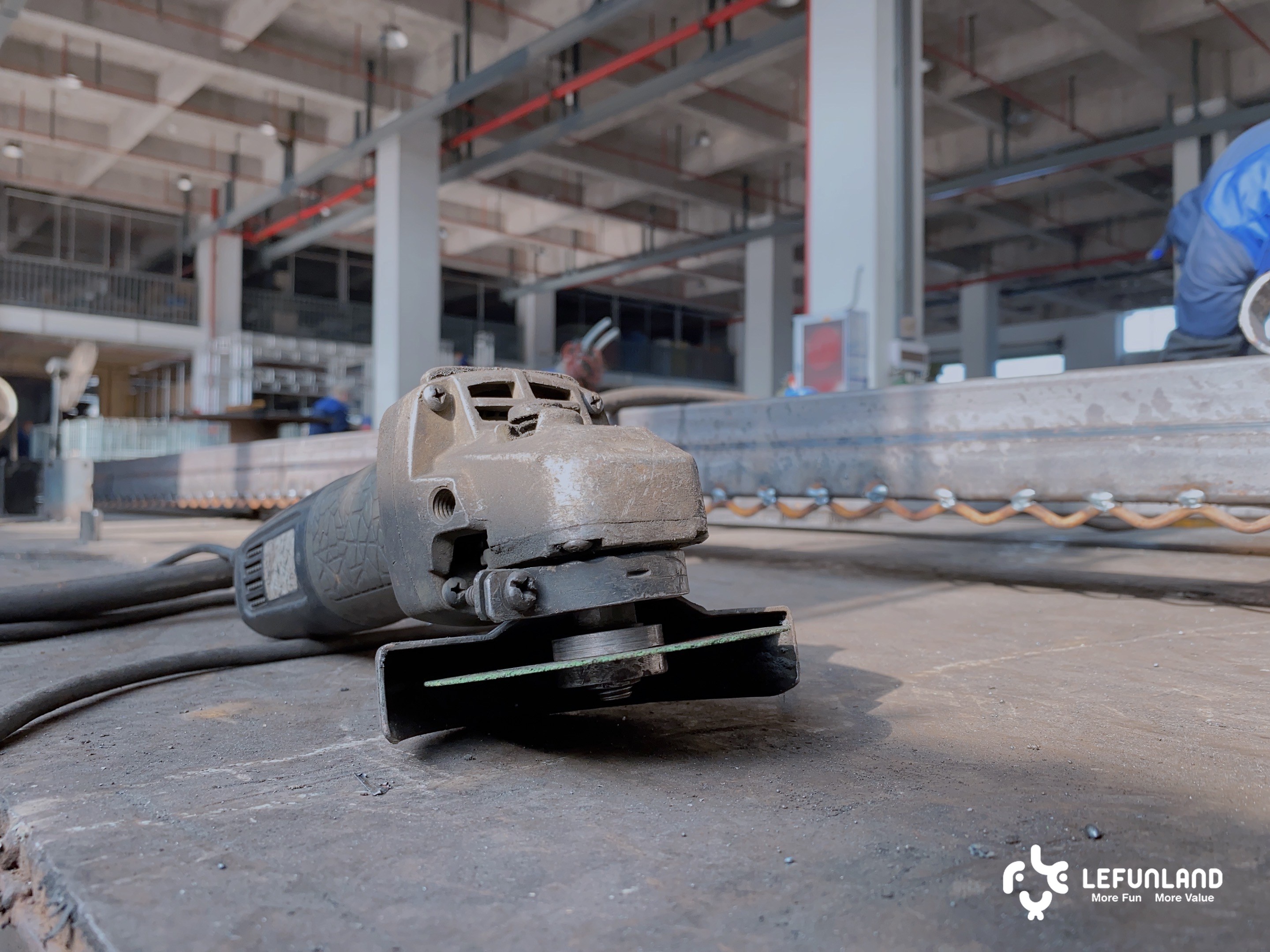
Steel-frame and material construction detail showing wall thickness and welding quality.
A certification logo does not prove that every component in a quotation has been tested. The applicable requirements depend on the destination market and the attraction type. U.S. projects commonly involve relevant ASTM requirements, while European and many international projects commonly refer to EN 1176. Trampolines, climbing attractions and Rope Courses may require additional standards or project-specific review.
Before production, ask the manufacturer to identify:
Do not assume that one report covers an entire FEC. Ask the supplier to connect each document to the equipment you are actually purchasing.
A good-looking playground can still be difficult to operate. Ask how the design handles parent sightlines, toddler separation, staff supervision, party-room traffic, cleaning access, queue areas, emergency exits and replacement of wear parts.
The manufacturer should ask for the floor plan, clear height, column locations, entrances and exits, target age groups, budget range and preferred attractions. These are part of the information required for a custom playground design.
A supplier with real FEC operating experience is more likely to notice problems that do not appear in a rendering: blind corners, difficult cleaning areas, attractions that create congestion, parts that are hard to replace and equipment combinations that do not support repeat visits.
“Production takes 45 days” does not mean the playground will open in 45 days. A typical custom project may require about one month for design, 45 working days for production, approximately 45 days for shipping and customs, and one to two months for installation.
Ask who is responsible for packing lists, export documents, shipping coordination, customs information, unloading requirements, installation drawings, technical supervision and missing-part checks. The supplier should explain what is included and what must be arranged locally.
Review the full order-to-opening timeline and complete the required site preparation before the equipment arrives.
A warranty is useful only when the buyer knows how to use it. Ask what is covered, what is considered normal wear, how a claim is documented and who responds after installation.
Also ask:
First-time owners often focus on the purchase price. Operators opening a second or third venue usually pay more attention to stability, spare parts and response time. International shipping, local repair labour and downtime can quickly erase a small saving in the original quotation. After opening, use a documented maintenance and cleaning checklist to track wear before it becomes a larger problem.
Project experience should be more than a gallery of attractive photographs. Ask how the manufacturer manages drawing approval, production checks, trial assembly, packing identification, installation changes and after-sales records.
The strongest evidence is a repeatable process: the same information is carried from the approved drawing into production, packing, installation and future spare-part support. That is more valuable than a long list of markets without documentation behind it.
Before paying a deposit, confirm that you have received or reviewed:
If a supplier cannot explain these items before receiving a deposit, it will probably be harder to get clear answers after production starts.
Lefunland has 15 years of indoor playground and FEC industry experience, with more than 3,000 projects across 60+ countries, over 100 related patents and an approximately 283,000-square-metre manufacturing base. Its team also operates several large FEC venues, bringing practical operating knowledge into layout planning, material choices, maintenance access and attraction selection.
Lefunland provides custom design, equipment manufacturing, logistics coordination, installation support, operating guidance and responsive after-sales service. It also has SGS-authorized testing capability and an authorization letter; the applicable report and testing scope should always be matched to the specific project and destination market.
For U.S. projects, Lefunland can also provide support through its U.S. branch, local account management and warehouse resources.
Request a live or recent walkthrough covering the company entrance, material storage, steel fabrication, soft-padding production, trial assembly, inspection and packing. Cross-check the company name and address against the contract, invoice, test reports and payment instructions.
Ask for the applicable-standard list, relevant test reports, material specifications, structural drawings, installation requirements and maintenance instructions. Confirm that each report covers the actual equipment, materials and market involved in the project.
The warranty should explain coverage, exclusions, normal wear and the claim process. The supplier should also identify included spare parts, replacement-part ordering, technical-response procedures and international shipping support.
A typical planning schedule is about one month for design, 45 working days for production, approximately 45 days for shipping and customs, and one to two months for installation. Local construction, permits and project complexity can change the final schedule.
To discuss a custom indoor playground project with Lefunland, prepare the floor plan, clear height, column locations, target age groups, budget range and preferred attractions. The team can then review the space, clarify the project scope and recommend the next steps.
Copyright 2018-2026 © ShangHai Lefunland Children's Products Co.,Ltd. All Right Reserved
