Contact Number: +86 4006234566




A 4,800 sq ft play center in the US Midwest replaced 62,000 balls after eighteen months of operation. Not because the balls wore out. Because the operator had no washing system, ran a hand-wipe protocol twice a year, and a parent posted a photo of what came out from under the surface. The replacement invoice was about $9,400. The reputation cost was larger. That is the part of a commercial ball pool nobody quotes for at the planning stage, and it decides whether the zone earns its floor space or quietly bleeds it.
A ball pit reads as the simplest thing in the building. It is a container with balls in it. In practice it is one of the more engineered zones on the floor: containment walls that take sustained lateral load, a floor build that has to absorb drop energy, drainage and access for cleaning equipment, sightlines for staff who need to see a child who has gone under, and a ball inventory that has to be counted, cleaned, and topped up on a schedule.
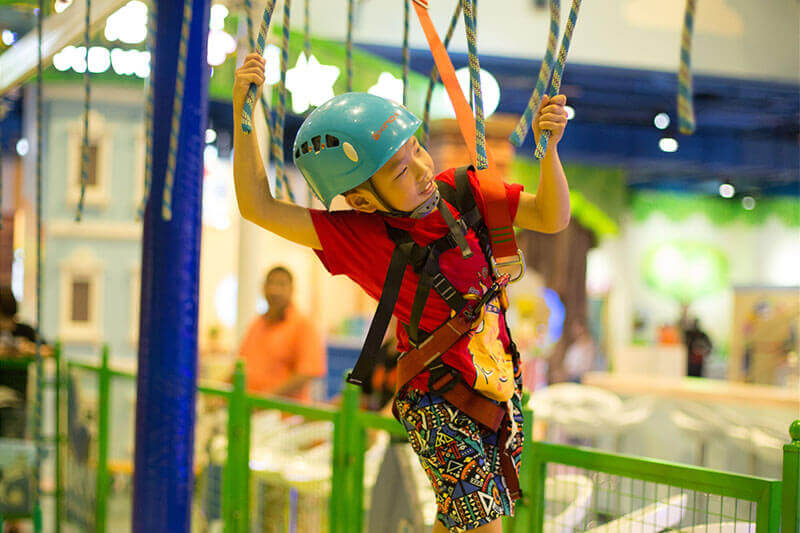
A ball pool built into the base of a multi-level structure - the slide exits and net bridges all feed the same pit.
Depth is the first decision, and it is an age decision rather than a fun decision. Toddler pools run shallow enough that a two-year-old who sits down still has their head clear of the surface. Pools built for children up to age ten run deeper, because the play is submersion and burial rather than wading. Mixing both depths in one basin is where operators get into trouble - the shallow end fills with older kids, the deep end pulls in toddlers, and the staff member watching it has to referee instead of supervise.
Ball quantity scales with surface area and depth together, which is why per-sq-ft rules of thumb break down. A shallow toddler pit and a deep kingdom-style pit of identical footprint can differ by a factor of three in ball count. Order the balls against the calculated volume, then add roughly ten percent as working inventory, because balls migrate out of the pit in every direction and the count is never what it was on opening day.
Containment wall height matters more than most layouts allow for. Walls too low turn the surrounding walkway into a ball field and put staff on constant retrieval duty. Walls too high block the parent sightline from the seating area, which is the single thing parents complain about most in post-visit surveys. The workable range keeps the surface visible from a seated adult at the perimeter while still holding the balls in during peak-hour play.
Balls are not a commodity line item, though they get quoted like one. The failure modes are cracking, color fade, and deformation, and they show up on different schedules.
| Attribute | What it affects | When the difference appears |
|---|---|---|
| Wall thickness | Crack resistance under adult weight and repeated compression | Months 6-18 |
| Resin grade and UV package | Color retention, surface chalking | Year 1-2 near skylights and windows |
| Seam quality | Split lines that trap dirt and cut skin when cracked | Varies widely by batch |
| Diameter consistency | How the pit reads visually, how evenly it drains in a washer | Immediately, then compounds |
Cracked balls are a safety item, not a cosmetic one - a split edge on a polyethylene shell is sharp. Facilities running a real inspection routine pull cracked balls continuously rather than in an annual purge, which is also how they catch a bad batch before it becomes a full re-order.
Ball pit hygiene is the reason a commercial ball pool either becomes the most photographed zone in the building or the one parents steer their kids away from. Debris in a pit is layered: surface litter, mid-depth crumbs and hair, and floor-level material that never comes up on its own. A surface skim addresses the first layer only.
Integrated ball-washing equipment cycles the full inventory through a cleaning and sanitizing process on a timed schedule, which changes the maintenance job from a shutdown event into a routine one. Lefunland builds these washing systems into ball pool projects rather than treating them as an accessory, because the operators who bought a pit without one almost always end up retrofitting inside two years, at higher cost and with a floor closure.
The pit floor and walls are the other half of it. Surfaces lined in 0.45mm PVC vinyl over 80-density EVA foam wipe down and dry fast; thinner vinyl scuffs and holds soil in the scuff. Drainage access at the pit floor decides whether a deep clean takes an afternoon or a day.
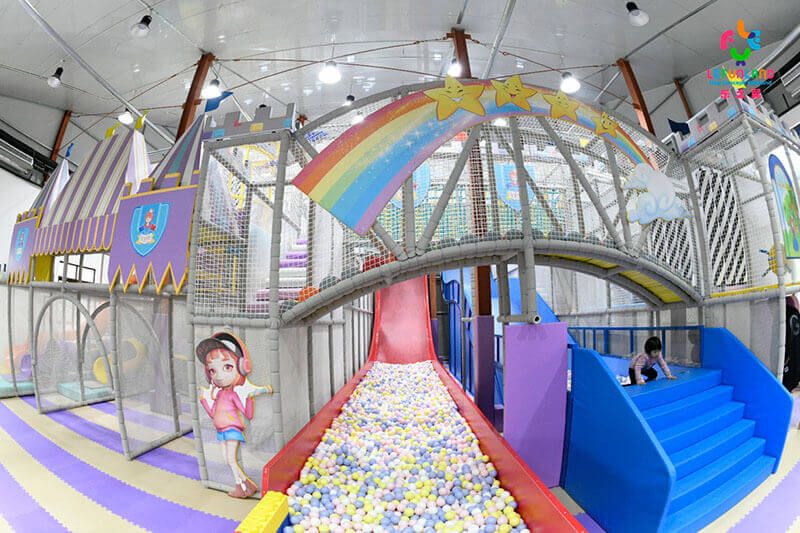
Ball Kingdom layout - blaster towers and ball cannons pull the play upward instead of keeping it in the pit.
The difference between a ball pit and a ball kingdom is what the balls do when they leave the pool. A kingdom-style build adds pneumatic blaster towers, cannons, target walls, vacuum tubes, and overhead dump buckets, all fed by the same ball inventory. Play stops being a single activity and becomes a loop: gather, load, fire, chase, gather again.
Lefunland's Ball Kingdom product line covers this category, alongside the Super Ball Pit configurations for operators who want the pool without the pneumatics. Every one is a custom design against the actual space, because blaster geometry is unforgiving - firing lines have to clear circulation paths, and the vacuum return has to run somewhere the ceiling height allows.
The commercial case for the pneumatic version is dwell time and age reach. A plain pit loses children around age seven. A blaster system holds them to ten or eleven, which matters for a facility whose birthday-party business skews older than its walk-in traffic. It also gives parents something to do, and a parent who is playing is a parent who is not watching the clock.
Everything above the balls is what customers photograph. Everything under them is what determines whether the zone is still tight in year seven. Lefunland builds ball pool systems on 48mm x 2.2mm steel frames with 80+ micron powder coating, lining every play surface in 80-density EVA foam under 0.45mm PVC. Industry-typical construction runs 40mm x 1.5mm tube, 40-60 micron coating, 40-50 density foam, and 0.35mm vinyl. On opening day the two look the same. The lower-spec build starts showing frame wobble at the entry ramps and compression flattening in the landing zones somewhere around year three, under full commercial traffic.
Ball pool systems fall under ASTM F1487 and EN1176 - entrapment clearances, edge and protrusion rules, and impact attenuation at the slide exits and platform drops that feed the pit. Lefunland operates an SGS-authorized laboratory that tests and issues inspection reports for the amusement equipment industry generally, not only for its own products, and is a principal drafting unit for China's national amusement equipment standards. The company that helps write the standards also builds to them.
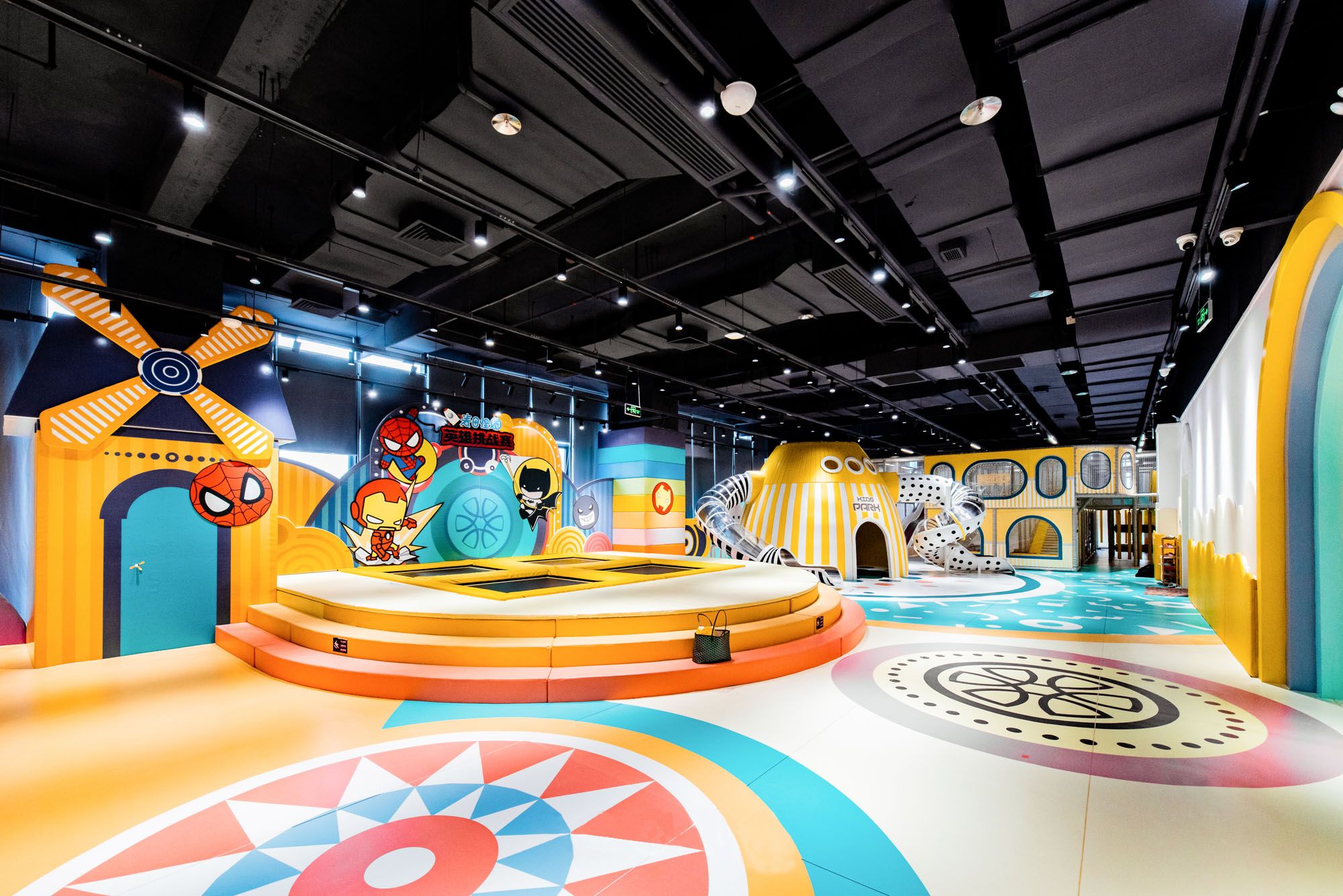
A custom floor plan where the ball pool anchors the centre and the structure wraps it - the layout most operators land on once traffic flow is modelled.
Ball pool equipment prices in the same band as the rest of a factory-direct build, from $10 per square foot, though the density rule applies: a small footprint carrying a full kingdom with pneumatics prices toward the top of the $10-15 range, while a large pit inside a 12,000 sq ft facility with generous walk zones sits at the bottom of it. The ball inventory, the washing system, and the pneumatic hardware are separate lines and worth quoting separately so the comparison across suppliers stays honest.
Since 2009, across 3,000+ projects in 60+ countries, the ball pool has stayed one of the highest-traffic zones in almost every floor plan Lefunland has delivered - which is exactly why it should not be pushed to a back corner to make room for the taller equipment. Production runs 45 days from design sign-off, out of a 70-acre factory in Dongyang, Zhejiang.
Send your space dimensions, ceiling height, and target age range and Lefunland will design a custom ball pool or Ball Kingdom layout against the actual floor plan, with the ball count, washing system, and structural specification itemised.
Get a factory-direct quote from the manufacturer that operates the testing lab and helped write the standards. 16+ years, 3,000+ projects, 60+ countries.
Copyright 2018-2026 © ShangHai Lefunland Children's Products Co.,Ltd. All Right Reserved
