Contact Number: +86 4006234566



A 9,200 sq ft FEC in Cangnan runs its zip line 28 meters end to end, from a 4.2-meter launch platform to a padded braking bay near the party rooms. The steel columns anchoring it are 48mm x 2.2mm wall tubing, the same grade used across the rest of the structure. Nothing about an indoor zip line is a bolt-on add-on. It is a load path, a braking system, and a harness chain that all have to agree with each other before a single rider clips in.
Operators keep adding zip lines to indoor playgrounds because the attraction earns its floor space back fast. A 15 to 40 meter run occupies a narrow footprint compared to a trampoline court or a full soft play structure, and it reads as a spectacle from anywhere in the venue. Parents stop pushing strollers to watch. That visibility is worth something on its own, but the engineering underneath it is what keeps the attraction running for years instead of getting quietly decommissioned after an insurance review.
A zip line puts a different kind of stress on a structure than a static climbing wall or a soft play frame. The load is not sitting still. It travels the length of the span, and at the launch and braking ends it concentrates into a single anchor point that has to absorb both the rider's weight and the deceleration force. Steel diameter and wall thickness decide how much margin the structure has before that concentrated load matters.
Commercial-grade indoor zip line equipment uses 48mm x 2.2mm steel tubing for the support columns, roughly 20 percent thicker wall than the 40mm x 1.5mm tubing that shows up in lower-cost or residential-adjacent builds. The difference is not visible on opening day. It shows up after a few thousand cycles, when a thinner-walled column starts to show fatigue at the weld points closest to the anchor brackets. Powder coating at 80-plus microns protects that steel from the humidity and cleaning-chemical exposure that a busy FEC generates daily, which matters more for a zip line than for most other attractions because the anchor hardware sees repeated mechanical stress at the same coated surface.
Three braking approaches cover most commercial indoor zip line equipment. Gravity braking uses a slight uphill grade near the end of the run so the rider loses speed naturally before reaching the platform - simple, low-maintenance, but it needs enough vertical clearance to build the grade, which not every ceiling height allows. Magnetic braking uses eddy-current resistance from a fixed magnet array; no moving parts to wear out, consistent stopping distance regardless of rider weight, and it is now the more common choice in new commercial installs because it removes the ceiling-height requirement that gravity braking demands. Manual or friction braking puts stopping control in an operator's hands at the platform, which works but ties up staffing in a way the other two methods do not.
The braking method an operator picks shapes almost everything else about the layout - platform height, run length, and how many staff a shift needs at the attraction. A facility running lean on staff usually lands on magnetic braking specifically because it needs one person at launch instead of one at launch and one at catch.
Indoor zip line equipment typically covers riders from about 30 kg through 120 kg, though the exact range depends on harness sizing and trolley rating rather than any single fixed number. Weight minimums exist because a rider under a certain mass will not generate enough momentum to complete the run on a gravity-braked system, and can stall mid-span. Weight maximums exist because the trolley bearings and cable are rated to a specific load, and exceeding it is the fastest way to void a certificate.
Age minimums track weight more than birthdays. A well-built harness system fits children as young as four with the right weight, and the same attraction serves adults on staff outings or birthday party chaperones who want a turn. That range is part of why zip lines pull revenue from groups a typical toddler soft play zone never reaches.
Ceiling height decides run length more than floor space does. A 15-meter run with a 3-meter launch platform needs less vertical clearance than a 40-meter run with the same platform height, because longer runs typically want a slightly steeper drop to maintain rider speed through the middle section. Facilities with 6 to 8 meter clear ceiling height can usually support a full-length commercial run; anything under 5 meters tends to cap the design at 15 to 20 meters unless the braking system is magnetic, which relaxes the grade requirement.
This is where custom engineering matters more than a catalog spec sheet. Every building has a different roof truss pattern, a different HVAC duct run, a different sprinkler head layout. A zip line anchored into columns that were sized for the specific ceiling structure of one building does not transfer directly to a building with a different clear span. Design work happens per site, not per template.
ASTM F1487 and EN1176 both cover playground equipment broadly, but zip lines pull in additional scrutiny around harness rating, cable strength, and fall protection that a slide or a climbing wall does not trigger in the same way. Certification testing on a commercial indoor zip line verifies the trolley and cable assembly under rated load, confirms the braking system stops within a specified distance at maximum rated speed, and checks that the harness hardware meets fall-arrest standards independent of the playground-equipment standard itself.
Lefunland operates an SGS-authorized testing laboratory and holds principal drafting unit status for China's national amusement equipment standards, which means the same organization writing structural guidance for zip line anchoring also runs the lab that certifies it. That is a narrow niche in this industry. Most manufacturers send equipment out to third-party labs and wait on someone else's schedule; testing in-house shortens that loop.
Zip lines rarely stand alone in a new build. Operators frequently pair one with an indoor ropes course, using the same overhead steel grid to carry both attractions and split the vertical space more efficiently than building two separate structures. A ropes course suspended at 3 to 6 meters can share column anchor points with a zip line launch platform, which cuts steel cost per square foot and gives guests a natural progression - climb the ropes course, then launch from the platform at its high point. The two attractions also serve overlapping age ranges, five and up for ropes, four and up for zip lines with weight minimums, so the shared audience keeps both structures busy through the same daypart.
Commercial indoor zip line equipment from Lefunland starts from $10 per square foot, factory-direct, following the same mid-range pricing structure as the rest of the equipment catalog - not the cheapest option on the market, but built on 48mm x 2.2mm steel rather than the thinner tubing that undercuts it on price. Production runs on a 45-day schedule from design approval, consistent with the rest of Lefunland's equipment types. Lefunland has delivered zip line installations as part of 3,000+ completed projects across 60+ countries since 2009, out of a 70-acre factory that produces the steel structure, harness hardware, and braking components under one roof rather than sourcing them separately.
A zip line quote should specify steel diameter and wall thickness, the braking method and its stopping-distance rating, the certificate numbers behind the harness and cable assembly, and what the warranty actually covers on wear components like trolley bearings. Those four answers tell an operator more about long-term reliability than any marketing photo of the finished install.
Lefunland engineers indoor zip line equipment around a facility's actual ceiling height, floor plan, and traffic pattern rather than fitting a building to a fixed catalog spec. Send a floor plan and ceiling clearance to contact@lefunland.com or message +8613605727866 on WhatsApp to request a quote and start the structural review.

An indoor zip line in commercial use - the harness and trolley system carries riders from launch platform to braking zone.
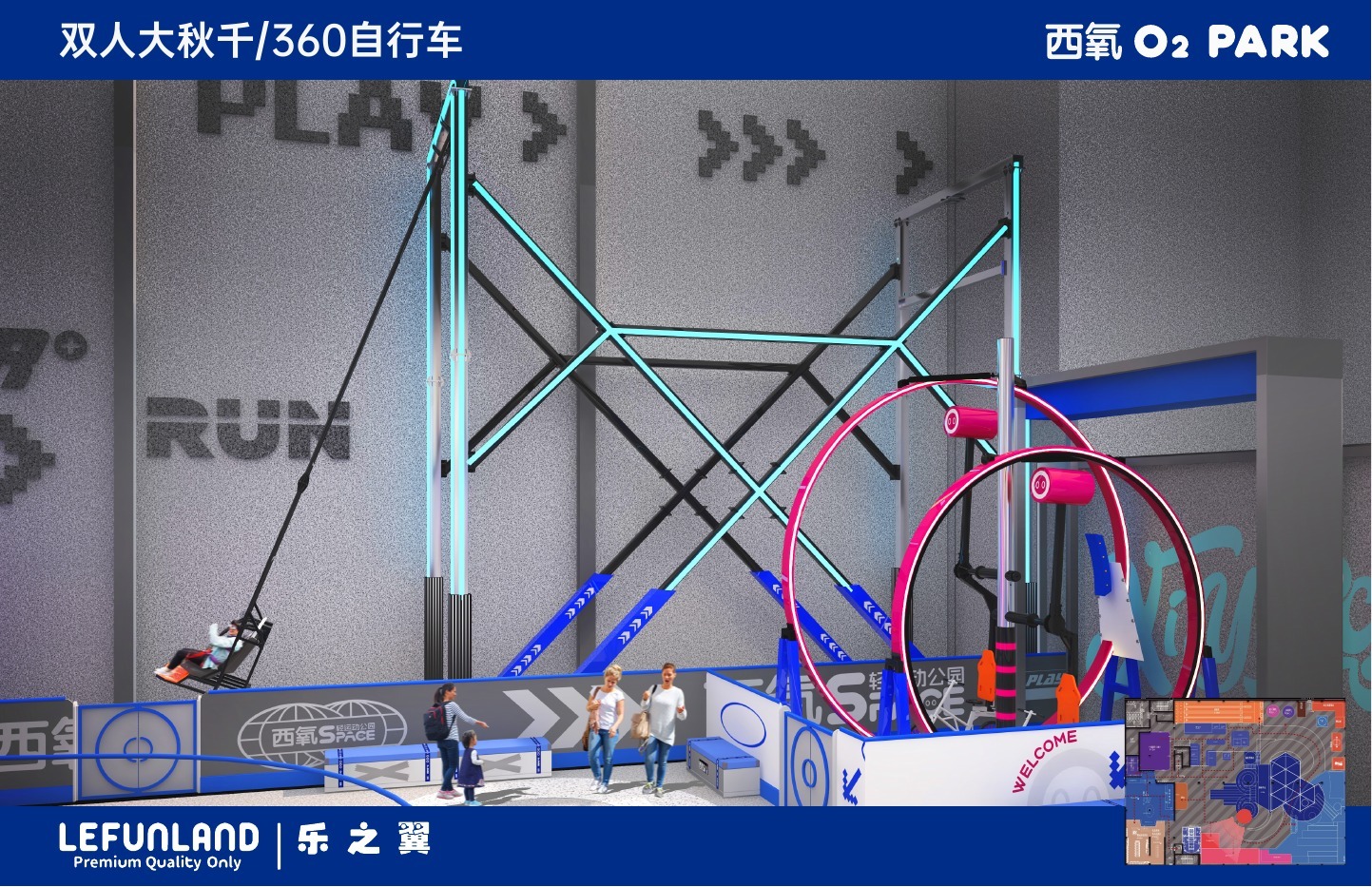
An indoor ropes course installation sharing overhead steel with adjacent adventure attractions - a common pairing with zip line equipment.
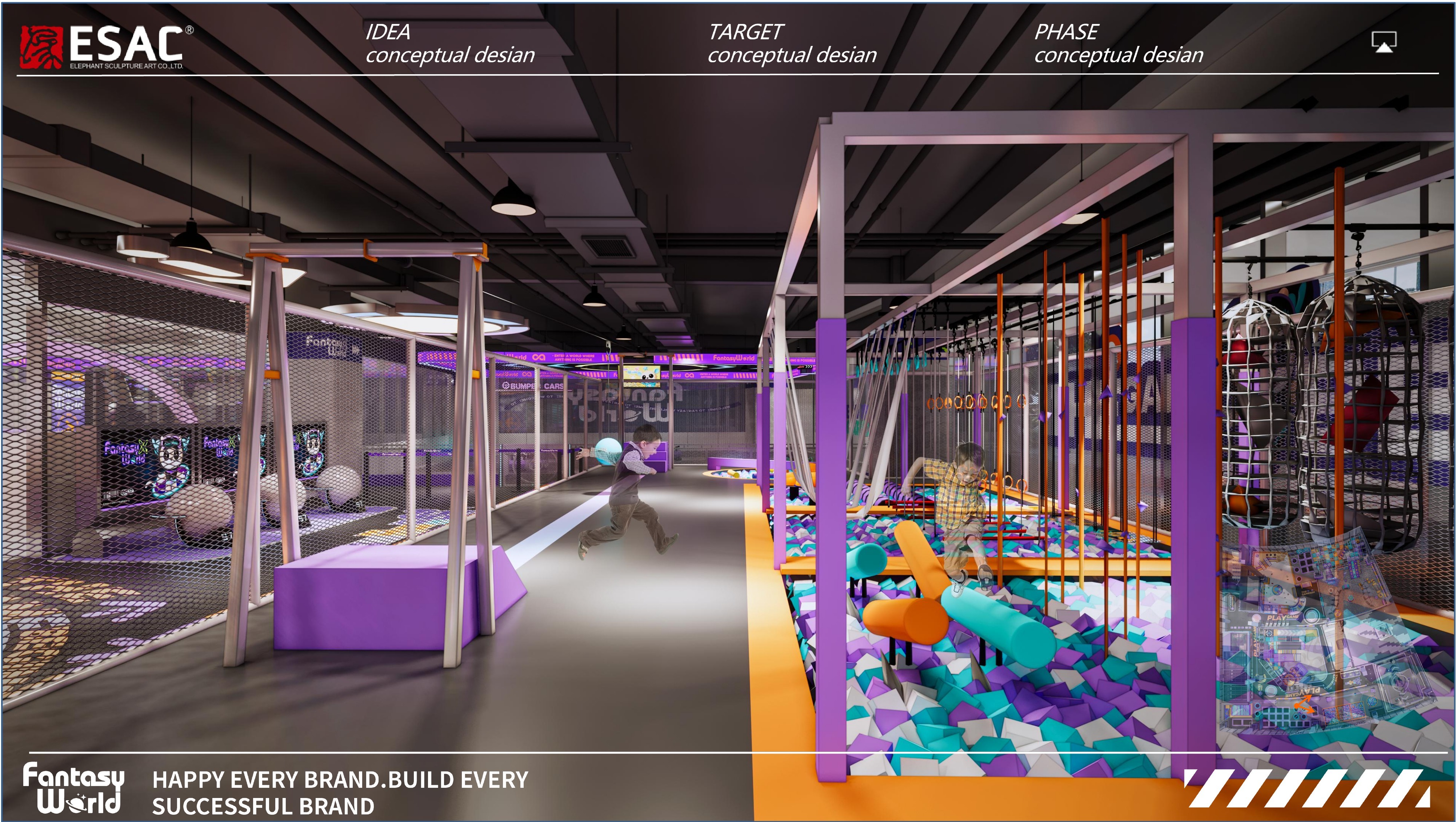
Overhead steel columns and belay rail on an indoor adventure structure - the same 48mm x 2.2mm tubing grade used in zip line anchoring.
Copyright 2018-2026 © ShangHai Lefunland Children's Products Co.,Ltd. All Right Reserved
