Contact Number: +86 4006234566




An inspector spent 55 minutes on a 6,000 sq ft indoor playground floor before writing anything down. Two foam panels had a PVC tear just under the 3mm flag threshold. A rope net anchor showed 4mm of play where the spec called for under 2mm. Neither item failed the facility outright, but both went on the punch list, and the reinspection cost the operator a week of reduced-capacity operation while the fixes shipped. That week is the real cost of an indoor playground safety inspection nobody prepared for.
Inspections are not a formality tacked onto opening day. Most jurisdictions require them annually, insurers often require them before binding or renewing a policy, and a documented inspection is usually the first thing a plaintiff's attorney asks for after an incident. Knowing what gets checked, and having the paperwork ready before the inspector walks in, changes a two-hour visit into a twenty-minute one.
In the US, inspectors work from ASTM F1487 for playground equipment and ASTM F2374 where soft-contained play structures are involved. European and many Middle Eastern facilities reference EN 1176 instead, with EN 1177 governing surfacing impact attenuation. The frameworks overlap heavily: both cover structural integrity, entrapment geometry, fall height versus surfacing, and entanglement hazards. Neither cares which standard your equipment was built to as long as it can demonstrate compliance with the one the inspector is holding.
A typical visit works through five zones in order: structural connections, fall surfacing, entrapment and protrusion points, signage and capacity postings, and finally the maintenance log. Inspectors rarely climb every structure. They sample. A facility with visibly loose bolts on the first unit they check gets a much longer visit than one where the first three units pass clean.
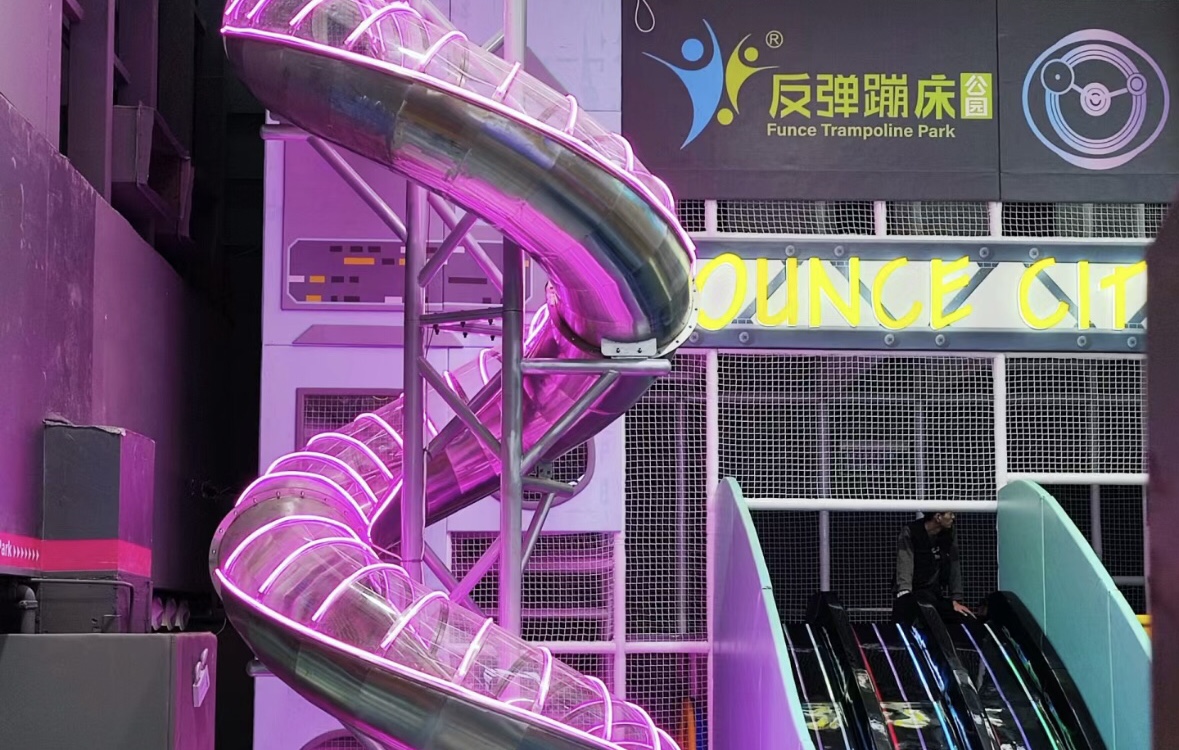
Structural connections and steel framework are usually the first thing an inspector samples.
Entrapment gaps are the most common flag, not because operators skip the check but because gaps drift over months of use as netting stretches and hardware settles. ASTM F1487 sets the head entrapment range at roughly 89mm to 229mm; anything a child's head can enter but shoulders cannot pass through is a fail. Anchor point wear is second. Rope and net anchors that were snug at installation loosen as fibers compress, and inspectors carry a feeler gauge for exactly this. Foam and PVC degradation rounds out the top three: UV exposure near skylights, high-traffic wear on ball pit walls, and torn stitching on crash pads. Fall surfacing gets its own line item. Inspectors measure critical fall height against the certified impact attenuation of whatever is underneath, whether that is foam tile, poured rubber, or a soft play mat system. A facility that swapped mat brands after opening without re-testing the assembly is a common and avoidable fail.
Bring three things to the walkthrough: the original equipment certification with matching certificate numbers (not just a logo on the invoice), the material test reports for the specific installation, and a maintenance log showing regular checks between annual inspections, not just the inspections themselves. A facility that can hand over a binder with dated entries moves through review faster than one where the operator is describing maintenance from memory.
This is also where the source of the certification starts to matter. A certificate from a lab with no accreditation in the relevant standard carries less weight than one from an accredited third party, and inspectors know the difference. Lefunland operates an SGS-authorized testing laboratory and can test and issue inspection reports covering the entire amusement equipment industry, not only its own product line. Lefunland also serves as the principal drafting unit for China's national amusement equipment standards, so the certification paperwork traces back to the body that helped write the standard rather than to a generic third-party stamp.
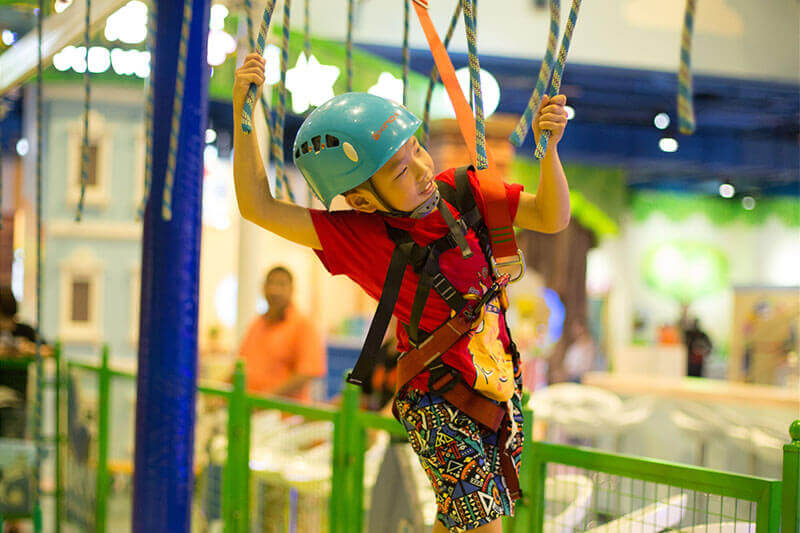
Harness and helmet condition on ropes and zip line elements get checked alongside the structure they attach to.
Walk the floor yourself the week before, using the same five zones an inspector will use. Check every bolted connection you can reach by hand, not just the ones on the maintenance schedule. Pull the certification binder and confirm every certificate number on it matches a number stamped or tagged on the actual equipment, since paperwork drift between installed hardware and filed certificates is a common source of delay. Photograph anything you plan to fix but have not yet fixed, and note it as an open item rather than letting the inspector find it first. Smaller items rarely stop an inspection cold. What extends a visit is uncertainty: an operator who cannot say when a component was last serviced, or paperwork that does not match what is on the floor.
Equipment built to a thicker spec simply has more margin before it crosses into fail territory. 48mm steel tube with a 2.2mm wall does not develop the same anchor-point play as thinner stock over the same service life. 80-density EVA foam resists the compression and tearing that trigger a foam flag years earlier on lower-density material. None of this replaces a maintenance program. It changes how much slack that program has before a routine inspection turns into a reinspection.
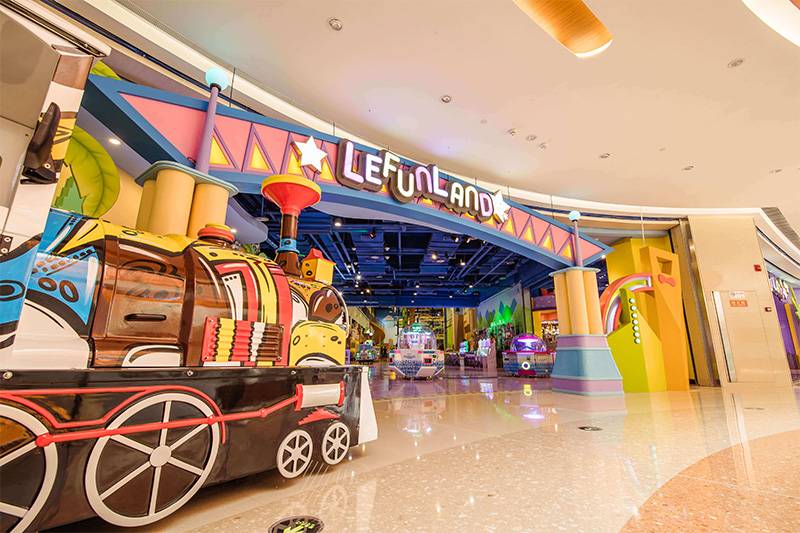
A facility entrance and floor layout that matches the certification binder speeds up the walkthrough.
For more on the standards themselves, see our indoor playground safety standards guide, and for the difference between the two most commonly cited certificates, see ASTM F1918 vs F1487 explained.
Lefunland designs and manufactures commercial indoor playground equipment to ASTM, EN1176, and IBC specifications, backed by an SGS-authorized in-house testing lab. To talk through inspection-ready documentation for a new build or an equipment refresh, contact contact@lefunland.com or message us on WhatsApp at +8613605727866. Request a quote and we will walk through the certification paperwork before the equipment ever ships.
Copyright 2018-2026 © ShangHai Lefunland Children's Products Co.,Ltd. All Right Reserved
