



25 Indoor Playground Marketing Ideas That Actually Drive Visits
A 9,000 sq ft family entertainment center outside Columbus was running about 210 paid visits a week in its fourth month. Fourteen months later it was running 640. The equipment never changed. What changed was that roughly 40 percent of weekday traffic started arriving through three school partnerships and a Tuesday-morning toddler session that did not exist on opening day. Most of the indoor playground marketing ideas that move a number like that are unglamorous, cheap, and repeatable.
The ones that do not work are usually the ones that treat an indoor playground like a retail store. Foot traffic here is driven by a small set of local parents who visit repeatedly, not by a wide pool of strangers who visit once. That distinction decides which channels are worth funding.
Start with the booking data you already have
Before spending on anything, most operators can pull four numbers out of their POS: which day of week carries the weakest revenue, what share of visits come from repeat guests, what percentage of party bookings are weekday, and how many first-time visitors return within 60 days. Those four numbers tell you whether the problem is awareness, frequency, or the dead hours. Marketing spend aimed at the wrong one of the three is the single most common waste in this business.
| If the weak number is | The problem is | Where the spend belongs |
|---|---|---|
| Total unique visitors | Awareness | Local search, geo-targeted social, partnerships |
| Visits per guest per year | Frequency | Memberships, loyalty, programming calendar |
| Tuesday to Thursday revenue | Off-peak utilization | Toddler sessions, school groups, weekday party pricing |
Local search: five indoor playground marketing ideas with the shortest payback
Parents searching "indoor playground near me" on a rainy Saturday morning are the highest-intent traffic that exists in this category. They convert within the hour.
- Keep the Google Business Profile hours accurate by session block, not just open and close. Facilities that run toddler-only mornings and general admission afternoons confuse the listing when they publish one block.
- Refresh photos monthly. Recent imagery gets surfaced more often, and a floor photographed in November looks different from the same floor in June.
- Ask for reviews at the exit, at the moment a kid is still talking about the slide. Review volume and recency both feed the map pack.
- Build a page for each suburb you actually draw from. A facility pulling from four towns needs four pages that name those towns, with drive times and parking notes.
- Answer the Google Q&A section yourself. Sock policy, age and height limits, whether adults pay, whether outside food is allowed. Those four questions cover most of what stops a booking.
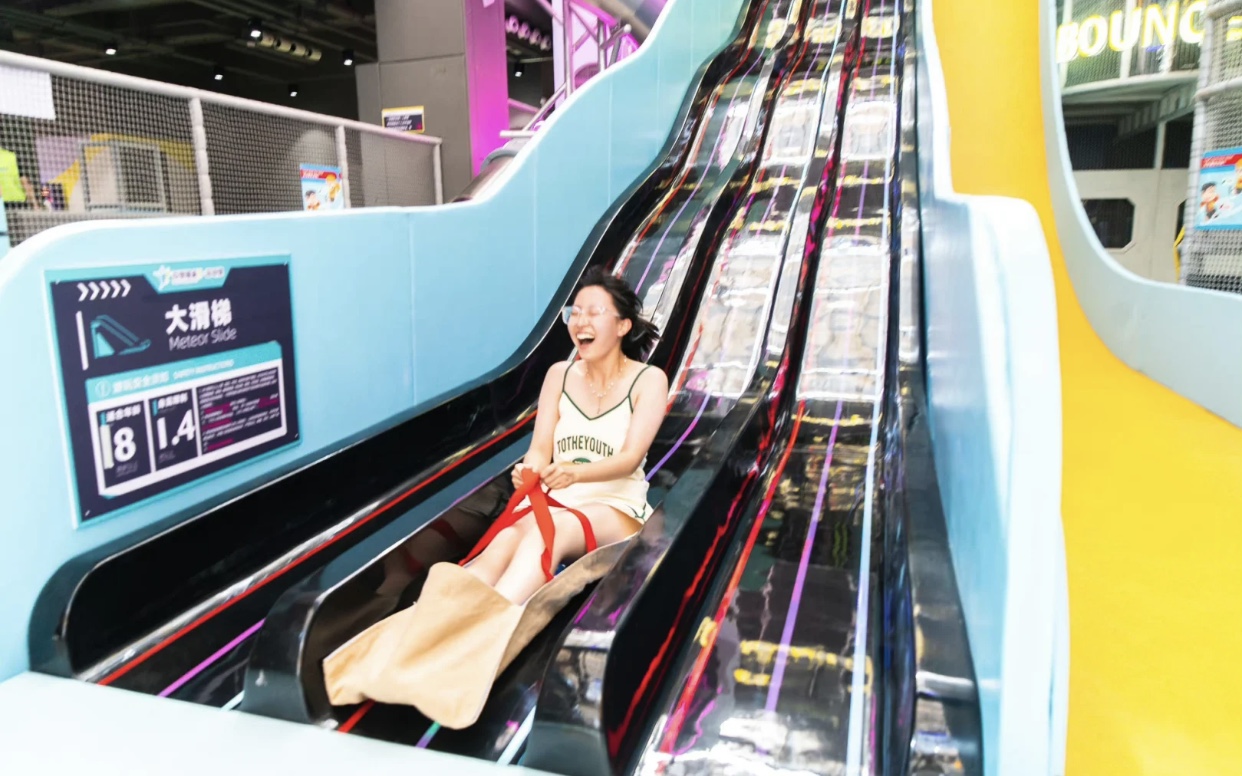
A play structure that photographs well from the parent seating area does more marketing work than most paid campaigns.
Birthday parties: the channel that markets itself
A birthday party puts eight to fifteen families inside your building on a schedule you control, most of whom have never been. Operators who treat parties as a revenue line and not a marketing line leave most of the value on the table.
- Three package tiers, with the middle one built to be chosen. The top tier exists mostly to make the middle look reasonable.
- A dated return voucher in every goodie bag. Undated vouchers get filed and forgotten; a 30-day expiry converts several times better.
- Treat the guest list as a mailing list. A short digital waiver at check-in captures the parents who came with the guests, not just the host.
- Weekday afternoon party pricing. The room is empty at 3 pm on a Wednesday, and a party there costs nothing in displaced walk-in revenue.
- Send the host parent a short photo set 24 hours later, sized for sharing. It gets posted, and it gets posted with your name attached.
Partnerships that put you in front of parents in groups
Reaching one parent costs money. Reaching a PTA mailing list costs a phone call.
- School fundraiser nights. A percentage of the door goes back to the PTA, the PTA does the promotion, and you fill a Thursday.
- Daycare and preschool weekday field trips at a flat per-child rate, scheduled into the 9 to 11 am window.
- End-of-season sports team parties. Youth soccer and little league both finish with a coach looking for a venue.
- Corporate family days. One HR contact at a mid-size local employer can be worth several weekends a year.
- Cross-promotion inside your own retail center. The coffee shop two doors down has the same customer sixty minutes earlier.
Social media indoor playground marketing ideas that survive the algorithm
The empty-floor photo is the most common mistake in this category. Equipment with no children on it reads as a product catalog. Equipment in use reads as an experience.
- Short vertical video of the floor in motion. Ten seconds of a kid coming down a spiral slide outperforms a professionally lit still of the same slide.
- Local parenting groups, answering questions rather than advertising. Operators who post promotions get muted; operators who answer "where can I take a two year old when it rains" get recommended.
- A named photo spot. One deliberately designed backdrop inside the structure produces user-generated content for years.
- Weather-triggered posting. Rain in the forecast is the single best-performing post trigger this business has.
- Paid geo-targeting on a tight radius. Most facilities draw from roughly a 15-minute drive time, and ad spend outside that ring is mostly wasted.
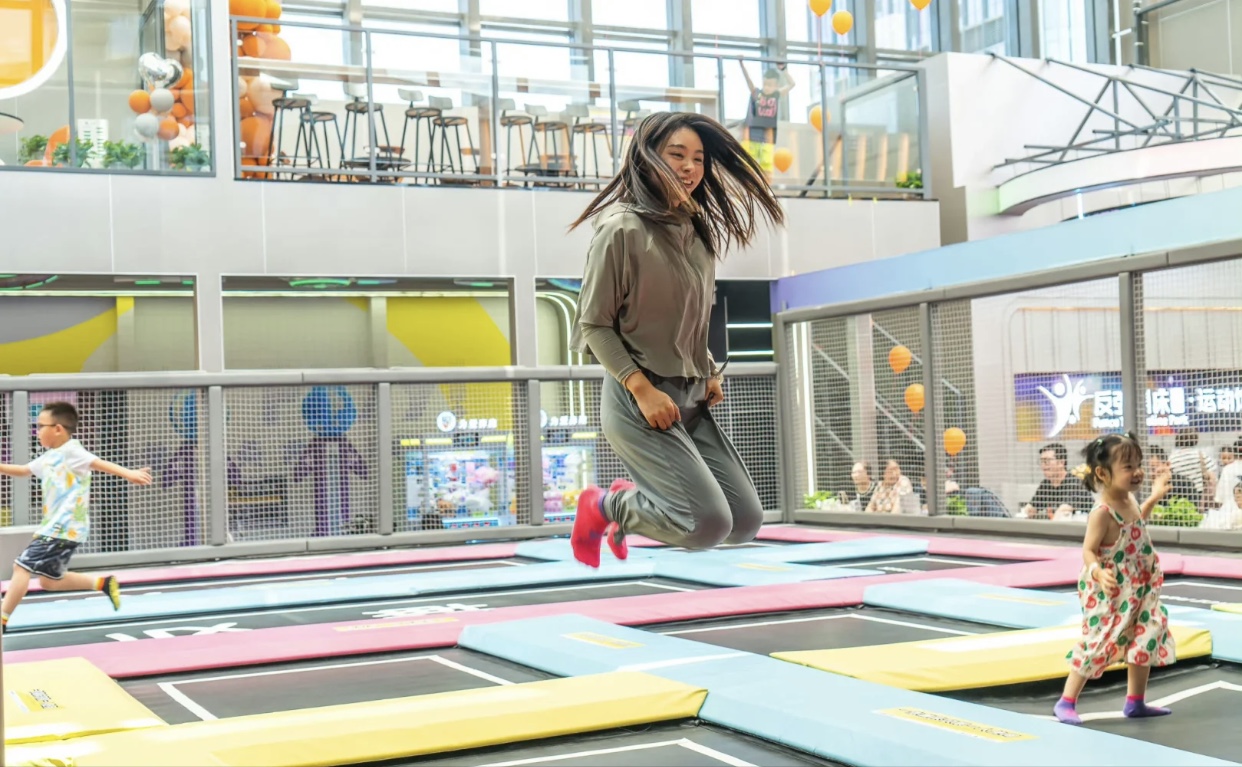
Distinct zones give the programming calendar something to build around and give social content variety.
Retention: the indoor playground marketing ideas that change the annual number
An indoor playground with 4,000 unique visitors and 2.1 visits per visitor per year is a different business from one with 4,000 visitors and 5.4 visits. Same building, same equipment, roughly double the revenue.
- Monthly memberships priced against three visits. Below three and you cannibalize; well above and nobody buys.
- Loyalty tracked by phone number. Physical punch cards get lost, and the lost card is a lost customer record.
- Toddler-only morning sessions. The 9 to 11 am window is dead otherwise, and parents of under-fives will pay for a floor without ten year olds on it.
- A programming calendar built on the school year. Half-terms, teacher in-service days, and the two weeks before school restarts are predictable a year in advance.
- A lapsed-visitor email at 60 days. It is the cheapest visit any facility buys.
What the building itself contributes
Marketing brings a family in once. Design brings them back. Across 3,000+ projects in 60+ countries since 2009, the operators with the strongest repeat rates are consistently the ones whose floor does not look like the floor twenty minutes away. A catalog layout gives a family an experience they can get elsewhere. A layout built for the specific room gives them a reason to drive past two competitors.
There is a second-order effect that shows up later. Equipment photographs well on opening day regardless of what it is made of. At month 30 the difference is visible in every photo a parent posts: 48mm x 2.2mm steel against a typical 40mm x 1.5mm, 80+ micron powder coating against a typical 40 to 60, 80-density EVA foam and 0.45mm PVC on the padding. Faded coating and scuffed vinyl are not a safety problem at that stage. They are a marketing problem, because that is what the user-generated content is showing.
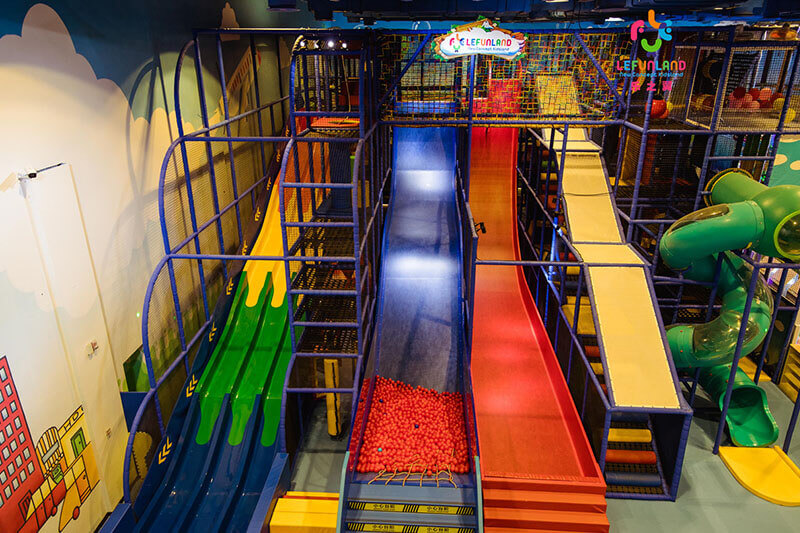
Custom layouts built for the actual room, rather than assembled from a catalog, are what repeat-visit businesses are built on.
Lefunland has operated since 2009, 16+ years, from a 70-acre factory in Dongyang, Zhejiang. Equipment is certified to ASTM, EN1176, and IBC, tested in an SGS-authorized laboratory the company operates, and the company serves as a principal drafting unit for China's national amusement equipment standards. Pricing starts from $10 per sq ft, with a 45-day production lead time.
Talk to us about your project
If you are planning a new facility or reworking an existing floor to support the programming above, send the room dimensions and a rough idea of your age mix and we will come back with a layout and pricing. Request a quote at contact@lefunland.com or reach us on WhatsApp at +86 136 0572 7866 for a factory-direct quote.
Related reading: 12 revenue streams for indoor playgrounds beyond admission and how profitable an indoor playground actually is.
