



Indoor Playground: Franchise vs Independent - Which Model Wins?
A 9,200 sq ft bay in a suburban retail center got priced two ways last spring. Under a franchise agreement: a $45,000 initial fee, a mandated build package quoted at $310,000, 6 percent royalty on gross revenue, another 2 percent into the national marketing fund. Built independently: $112,000 in equipment ordered factory-direct, roughly $180,000 in build-out, fit-up, and surfacing, and no percentage coming off the top every month. The operator went independent. But the indoor playground franchise vs independent decision rarely turns on the opening number. It turns on what the next five years cost, and on how much of the venue the operator is allowed to change once the doors are open.
The indoor playground franchise vs independent spreadsheet, line by line
Franchise agreements in the indoor play and family entertainment category commonly carry an initial fee somewhere between $30,000 and $60,000, ongoing royalties of 5 to 7 percent of gross revenue, and a marketing contribution of 1 to 2 percent. Territory protection is usually written in. So is a required opening package, a supplier list, and a construction spec the franchisee builds to.
Royalties are the line that compounds. A venue clearing $900,000 in annual gross revenue at a 6 percent royalty plus 2 percent marketing sends about $72,000 a year upstream. Over a seven-year term that is roughly half a million dollars, and it comes off gross, not off profit - it is owed in a slow quarter the same as a strong one. The independent operator carries that same money as marketing spend they control, debt service, or margin.
The offsetting number is ramp speed. A recognized brand tends to fill a calendar faster in its first two quarters, particularly for birthday parties, which is where a lot of this category's margin actually lives. How much faster depends heavily on whether the brand has any presence in that specific metro. In a market where nobody has heard of it, the operator is paying a royalty for name recognition that is not yet there.
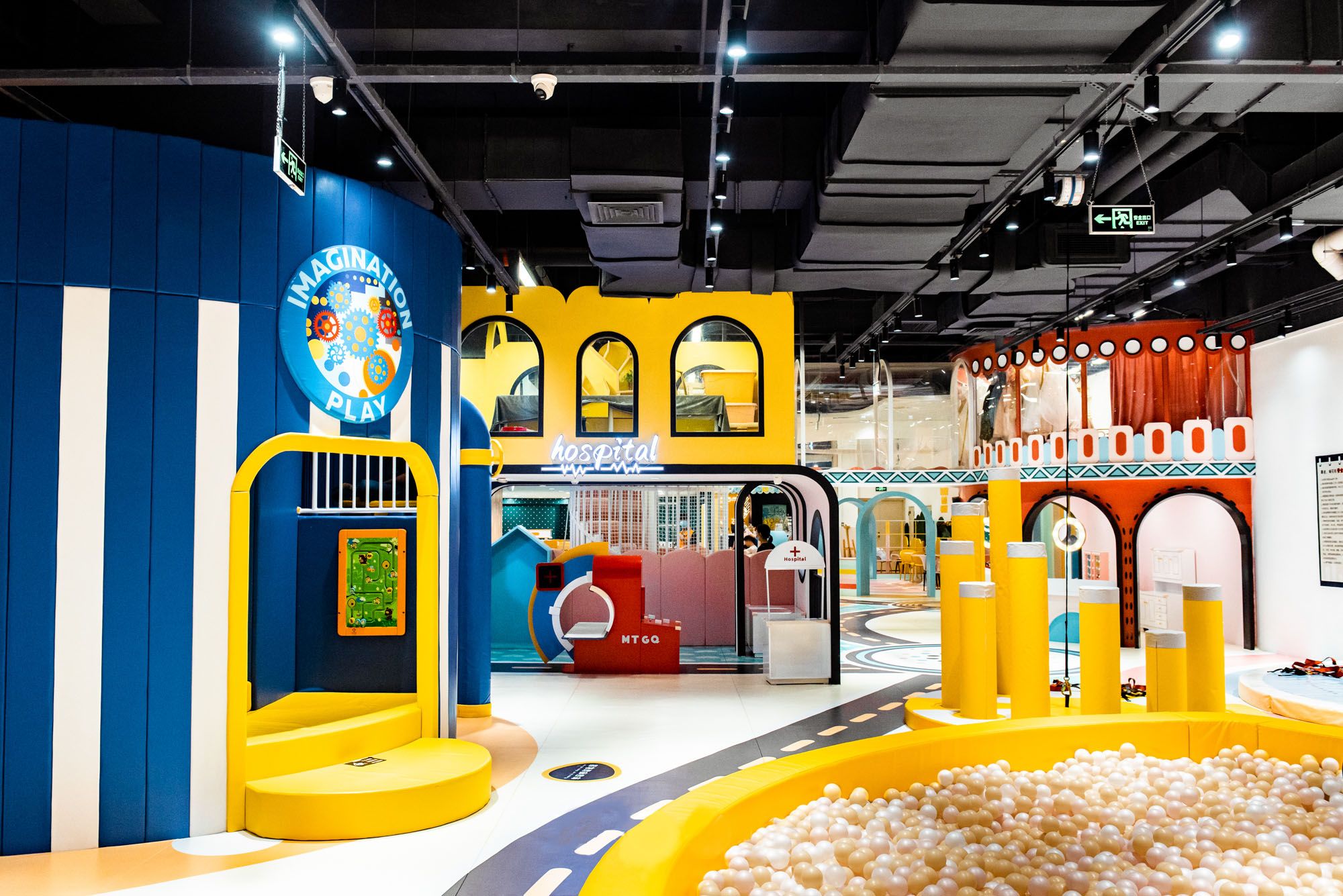
A custom-configured play structure built to the dimensions of an existing retail bay rather than to a standard package footprint.
Equipment sourcing splits the two models further than most operators expect
A franchise build package is priced as a package. The equipment inside it is normally specified by the franchisor and sourced through an approved vendor, and the franchisee sees a total, not a line-item spec sheet. That total may be entirely fair. It is just difficult to audit from the outside, because the five specifications that decide how long the structure lasts are rarely printed on it: steel tube diameter and wall thickness, powder coating thickness in microns, EVA foam density, PVC covering gauge, and what the warranty actually covers.
Buying independently, an operator sets those numbers themselves. Lefunland builds to 48mm x 2.2mm steel where the industry-typical figure is 40mm x 1.5mm, 80+ micron powder coating against a common 40 to 60, 80-density EVA, and 0.45mm PVC. Factory-direct pricing starts from $10 per sq ft, with most projects landing in the $10 to $15 range. Nothing about that is exotic. It is simply visible, which a bundled package price is not.
Density explains most of the spread inside that range. A 12,000 sq ft venue usually quotes near the bottom of it, because 35 to 45 percent of the floor is deliberately not equipment - walk zones, seating, party rooms. A 3,500 sq ft fit-out often quotes at the top or slightly above, since nearly every square foot is carrying structure. Both are correct answers for their context, and they produce different per-sq-ft numbers on the same quote sheet.
Worth noting that this is a custom industry. Every project is designed to a specific space, and manufacturers sell direct to buyers as a matter of course. A franchise package does not sit on top of a distribution chain so much as it bundles design, specification, and sourcing decisions into one agreed price, which is a different thing and has its own logic.
Design freedom is the quiet variable in indoor playground franchise vs independent planning
Repeat visits are the business model. Admission and party revenue both depend on families coming back four, six, ten times a year, and what brings them back is the experience of the room - the theme, the sightlines, the way a toddler zone is separated from a ninja course without feeling walled off. Equipment alone does not do that.
A franchise standardizes the room on purpose. Consistency is what makes a brand a brand, and a family that liked one location will recognize the next. The tradeoff is that the venue offers an experience available in other cities, and the operator cannot re-theme a tired zone in year four without an approval process. Custom design produces a room that exists nowhere else, which is harder to replicate and harder to compete with locally, but it also means the operator owns every design judgment, including the bad ones.
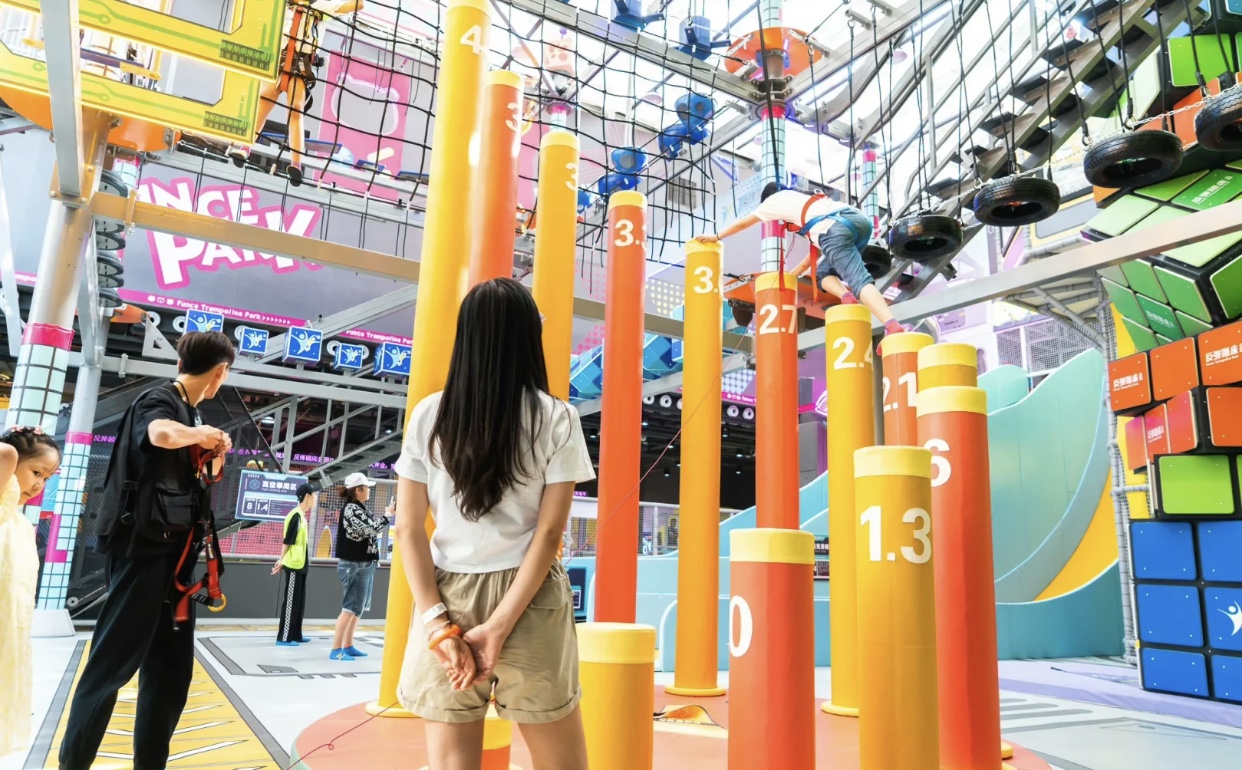
Zoning and theme work carry more weight on repeat-visit rates than the equipment list does.
What a franchise fee is actually buying
The playbook is the part people underrate. Site selection criteria drawn from dozens of prior openings, staffing ratios that have already been tested, a party package structure with known attach rates, vendor relationships, a POS configuration that works on day one. A first-time operator who has never run a venue is buying several years of somebody else's mistakes, and that has real value.
Lenders often price it in too. An SBA loan against a franchise concept with a filed disclosure document and a documented unit-economics history is frequently an easier underwrite than the same loan against an independent build with no operating comparables. That can change the equity requirement by a meaningful margin.
The counterweight is duration. Terms typically run seven to ten years with renewal fees, and transfer clauses can limit who the operator sells to and on what timeline. An independent operator sells a business. A franchisee sells a business plus an assignable agreement, and the buyer pool is narrower.
| Dimension | Franchise | Independent |
|---|---|---|
| Upfront fee | Typically $30,000-$60,000 | None |
| Ongoing cost | 5-7 percent royalty plus 1-2 percent marketing, on gross | Self-directed marketing spend |
| Equipment sourcing | Approved vendor, packaged pricing | Open, factory-direct from $10 per sq ft |
| Design | Standardized to brand | Custom to the space and the market |
| Ramp speed | Faster where the brand is known | Depends on local marketing execution |
| Operating playbook | Provided and tested | Built by the operator |
| Exit | Transfer subject to approval | Unrestricted sale |
Where independents most often run into trouble
Underestimating the non-equipment build. Flooring, HVAC modifications for a room that will hold 300 people, fire suppression changes, restroom counts, ADA compliance, permit cycles. On a 9,000 sq ft space these frequently exceed the equipment budget, and an independent operator meets them without a construction template. A franchisee gets a spec book that has already been through plan review in forty jurisdictions.
Marketing is the second one. Without a national fund there is no pre-opening awareness campaign unless the operator builds it, and the first ninety days after opening set the party-booking pattern for the year.
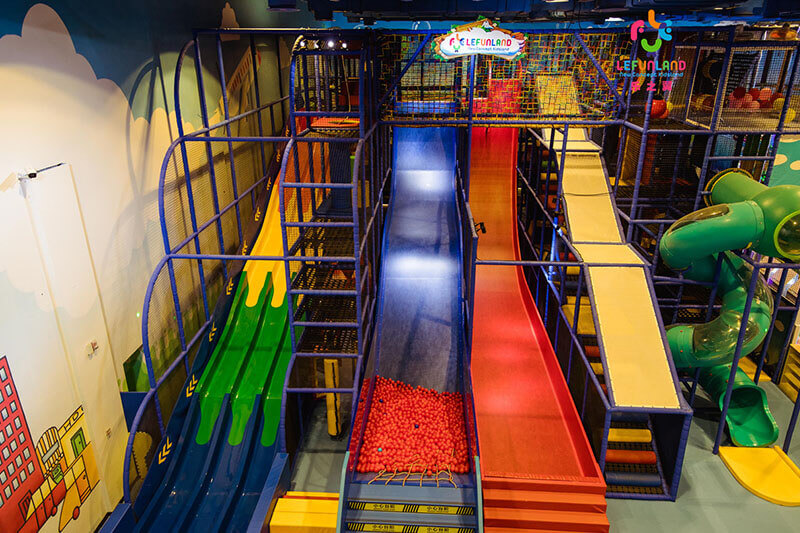
Certification documentation matters equally in either model - the difference is who holds responsibility for verifying it.
Matching the model to the operator
Capital, experience, and market position tend to sort this more than preference does. An operator with hospitality or retail management background, a specific site in hand, and enough capital to absorb a slower first two quarters generally has less to buy from a franchisor. A first-time owner in a market where a national brand already draws is buying something concrete with the royalty. Some operators run independent for a first location and franchise for a second in a different metro, or the reverse.
The equipment decision sits underneath both. Whichever model an operator picks, the structure in that room will be carrying full commercial traffic for the next seven to ten years, and the difference between a build that holds up and one that starts wobbling in year three shows up on the P&L long before it shows up in a photograph.
About Lefunland
Lefunland has manufactured commercial indoor playground equipment since 2009 - 16+ years, 3,000+ projects delivered across 60+ countries, from a 70-acre factory in Dongyang, Zhejiang. The company is a principal drafting unit for China's national amusement equipment standards and operates an SGS-authorized testing laboratory that can test and issue inspection reports for the amusement equipment industry as a whole. Equipment is certified to ASTM, EN1176, and IBC, with a 45-day production lead time and factory-direct pricing from $10 per sq ft.
Request a factory-direct quote
Send your floor plan, ceiling height, and target opening date and Lefunland will return a 3D design and an itemized quote with the material specifications written on it. Email contact@lefunland.com or message WhatsApp +86 136 0572 7866.
