



Indoor Playground Equipment for the Middle East: Climate, Culture, and Compliance
A 9,000 sq ft unit on the upper level of a Dammam mall opened last year with a four-level structure, a small ninja lane, and a toddler zone walled off from the main run. Equipment came to about $112,000 factory-direct, three 40-ft containers through Jeddah Islamic Port, installed in 26 days once the site was handed over. The operator's busiest hour is 9 PM. That single fact explains most of what makes an indoor playground in the Middle East a different build from the same square footage in Manchester or Ohio. The demand curve, the mall lease, the certification file, and even the foam all shift.
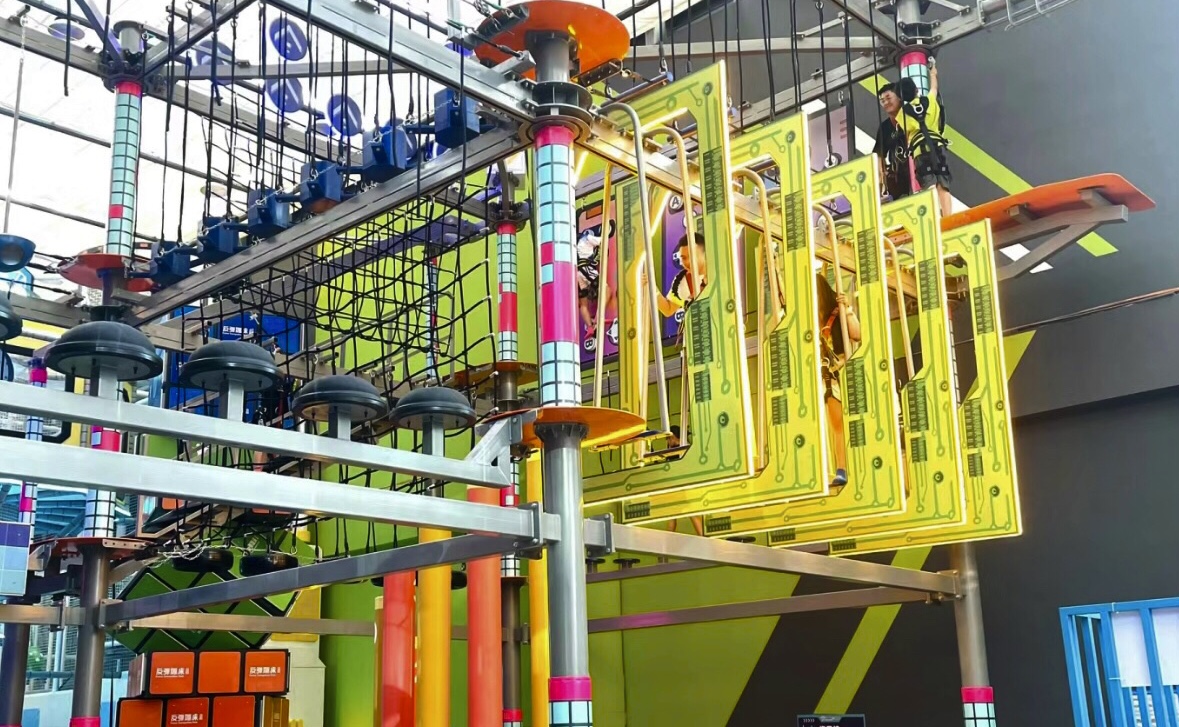
Heat is the business model
From May through September, daytime highs across the Gulf sit in the mid-40s Celsius and regularly touch 50. Outdoor play is off the table for roughly five months of the year, and in the hottest weeks it is off the table for most of the daylight hours too. Northern European and North American operators build for a seasonal peak. Gulf operators build for an inverted one: summer is the high season, because summer is when the air conditioning is the product.
That changes the arithmetic on capacity. A facility that would be sized for weekend surges elsewhere gets sized here for sustained weekday evening load, seven days a week, for months at a stretch. Equipment sees more cumulative traffic hours per year than the same structure in a temperate market. Wear shows up faster. So does the gap between a 48mm x 2.2mm steel frame and the 40mm x 1.5mm tube that is common at the entry end of the market - not on opening day, but somewhere in the second or third summer, when the joints on the lighter frame start to work loose under a load pattern nobody modelled for.
The mall lease writes the floor plan
Standalone play centres exist in the region, but the centre of gravity is the mall. Landlords in Riyadh, Dubai, Doha, and Kuwait City treat family entertainment as an anchor that pulls dwell time, and the units they offer come with constraints attached: a fixed ceiling height, a shared fire strategy, an agreed hoarding period, and a fit-out window that is usually measured in weeks rather than months.
Ceiling clearance is the one that reshapes designs most often. Many upper-level mall units in the Gulf give 5 to 7 metres of usable height, which supports a genuinely tall multi-level structure. Others sit under a services void and give 3.5. A four-level design drawn for the first will not fit the second, and the difference is not something you resolve by shortening a slide. It is a different structure. This is why the 3D design stage matters more here than the catalogue stage - the space dictates the equipment rather than the other way round, which is also the reason a turnkey approach that carries design, manufacture, and installation together tends to survive a tight mall fit-out schedule better than a split supply chain.
Fit-out windows also drive how equipment gets packed. Splitting a project across containers so that the first box carries everything the installers need for week one, rather than an arbitrary volumetric split, buys back days on site. It is a packing-list conversation, and it happens before production, not after.
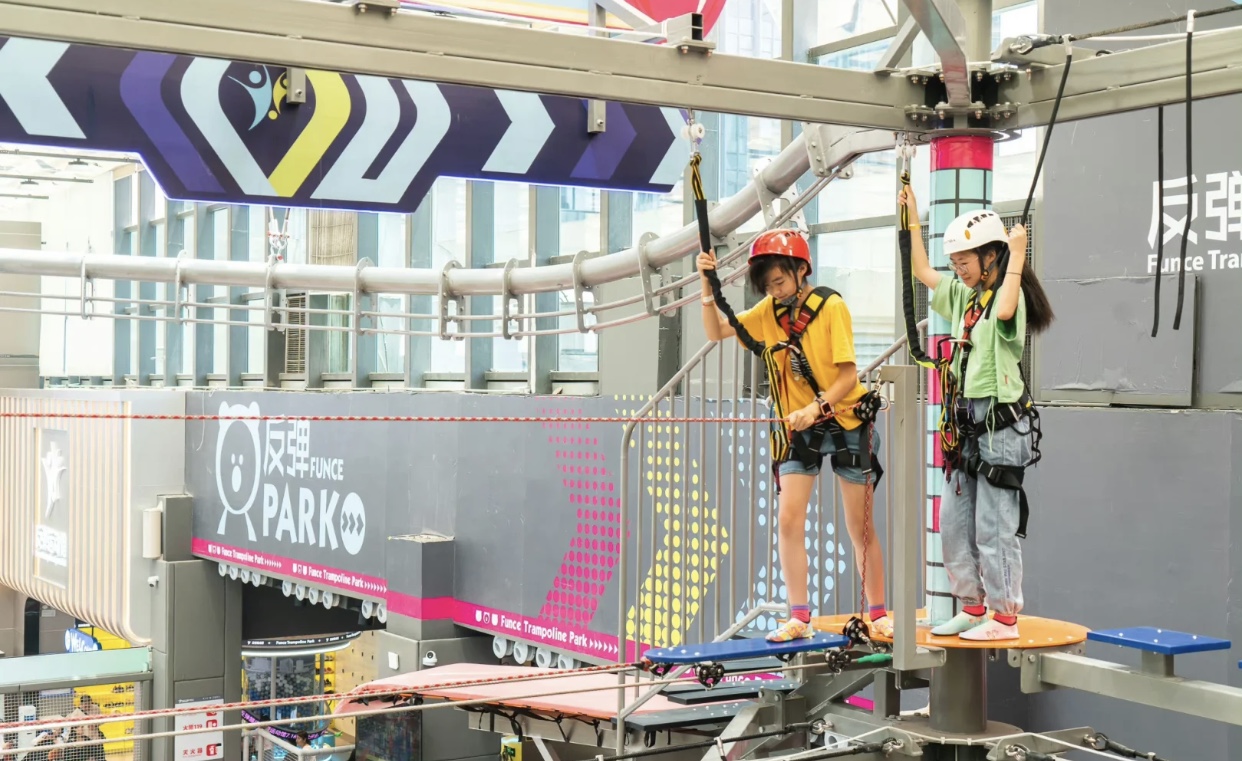
How the day actually runs in the Gulf
Trading hours run late. Peak family traffic across most of the GCC lands between 7 PM and 11 PM, and in Ramadan it shifts later still - the floor is quiet through the fasting hours and then fills after iftar, often past midnight. Facilities that staff to a Western afternoon peak find themselves overstaffed at 3 PM and short at 10.
The weekend is not uniform either. Saudi Arabia, Qatar, Kuwait, and Bahrain run Friday-Saturday; the UAE moved to Saturday-Sunday in 2022 with a half-day Friday. Operators with sites in more than one country run two different weekly demand shapes off the same equipment package.
Layout carries a cultural load as well. Parent seating tends to be generous and positioned for direct sightlines into the play area rather than tucked into a cafe corner, because in much of the region the adult accompanying the child stays for the full session. Stroller circulation is heavier than in most Western sites. Prayer room adjacency, family seating areas, and separate entrances into a soft play zone are all common requests, and mall management often has its own guidance on them. None of these are equipment questions in isolation - they are floor-plan questions that constrain where equipment can go, which is why they belong in the first design conversation rather than the last.
Compliance: what an indoor playground in the Middle East has to clear
There is no single Gulf-wide playground certificate. What exists is a layered system, and the layers vary by country.
| Market | Typical conformity route | Also enforced locally |
|---|---|---|
| Saudi Arabia | SABER platform - product and shipment certificates of conformity via SASO | Municipality inspection; mall landlord requirements |
| UAE | MoIAT conformity schemes; GSO G-Mark where the product category requires it | Dubai Municipality and Abu Dhabi play-area guidance |
| Qatar | QGOSM conformity assessment | Ministry and municipality inspection |
| Region-wide reference | EN1176 and ASTM F1487 test reports | Insurer and landlord due diligence |
In practice the EN1176 and ASTM F1487 test reports do most of the heavy lifting. GSO technical regulations lean heavily on European standards, and both municipalities and mall landlords are accustomed to reading EN1176 documentation. What matters at inspection is not the logo on a brochure - it is a certificate number tied to the specific structure, with the test house and the issue date on it, and matching product descriptions on the commercial invoice, packing list, and certificate of origin. Mismatched descriptions between the certificate and the shipping documents are the most common reason a container sits longer than it should.
Lefunland equipment carries ASTM, EN1176, and IBC certification, and the company operates an SGS-authorized laboratory - it can test and issue inspection reports for the amusement equipment industry, not only for its own products. It is also a principal drafting unit for China's national amusement equipment standards. For a buyer assembling a SABER or MoIAT file, that means the test documentation comes from the same place as the equipment rather than from a third party queued behind other jobs.
Shipping, lead time, and what lands where
Production runs 45 days. Sea freight from eastern China to Jebel Ali is typically around three weeks, with Jeddah, Dammam, and Hamad Port in a similar band depending on transhipment. Budget for customs clearance and inland haulage on top, and for the fit-out window the landlord has already fixed in the lease. Working backwards from a target opening date, the order usually needs to be placed around four months out - and the order-to-opening timeline is where most schedule slippage originates, not on the factory floor.
Landed cost sits above the factory quote by container freight, duty, clearance, and local installation labour. GCC common external tariff on most goods is 5 percent, though category treatment varies and is worth confirming with a customs broker for the specific HS code. Equipment itself starts from $10 per sq ft factory-direct, with most projects between $10 and $15 - a 3,500 sq ft fit-out typically prices at the top of that band because almost every square foot carries structure, while a 12,000 sq ft floor prices lower because a third of it is intentionally walk zones, seating, and party rooms.
What Middle East conditions do to indoor playground materials
Air-conditioned interiors mute most of the environmental stress, but not all of it. Skylit atria in Gulf malls put real UV onto structures that would sit in shade elsewhere, and colour fade on plastics and printed panels runs faster there. Fine dust is constant and finds its way into ball pools and foam seams through every door cycle. Coastal sites in Dubai, Doha, and the Eastern Province carry salt in the air, and condensation forms wherever chilled interior air meets a surface that has been outside.
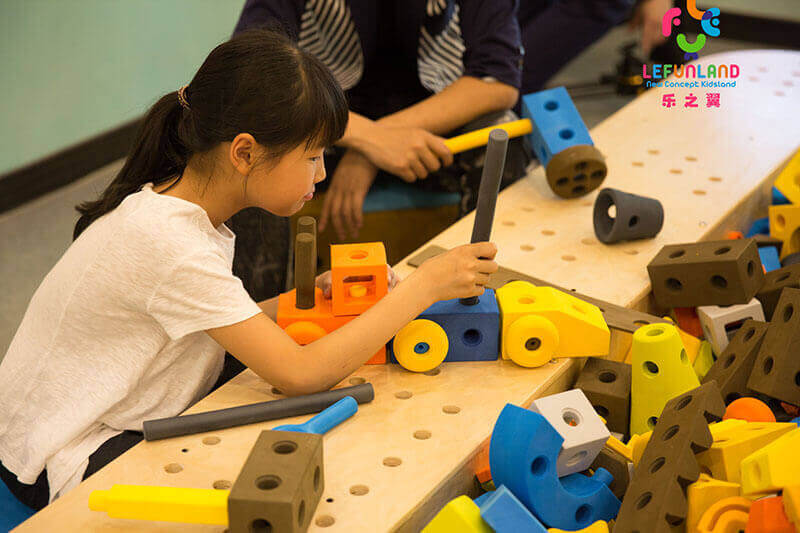
Those conditions are where coating thickness and foam density stop being spec-sheet trivia. An 80+ micron powder coat holds colour and resists corrosion longer than the 40 to 60 microns that is common in the market; 80-density EVA foam and 0.45mm PVC compress and abrade more slowly than 40 to 50 density foam under 0.35mm covering. On opening day the two builds photograph identically. The difference appears in the maintenance line of the P&L, and in a market where the equipment runs eleven hours a day through a five-month summer, it appears earlier than it would elsewhere.
Talk to us about your Middle East project
Lefunland has been manufacturing commercial indoor playground equipment since 2009 - 16+ years, a 70-acre factory in Dongyang, China, and 3,000+ projects delivered across 60+ countries, including installations in Saudi Arabia, the UAE, and Qatar. Every project is custom-designed to the space, with 3D design, ASTM/EN1176/IBC certification documentation, and installation support included. You can see completed work on the projects page.
Send your floor plan, ceiling height, and target opening date to contact@lefunland.com or message us on WhatsApp at +8613605727866 to get a factory-direct quote and a 3D concept for your site. Request a quote and we will come back with layout options priced to the actual square footage.
