Contact Number: +86 4006234566




Two structures went into a 6,500 sq ft center in the same week. Same footprint, same age band, one bought on price and one bought on spec. The cheaper one started to wobble at the main platform posts around month 20 and was pulled and replaced in year four. The other is still on the floor. On opening day nobody could tell them apart, because the differences that matter in indoor playground equipment materials live inside the steel wall, under the vinyl, and in the density of the foam - none of which show up in a photo. This is a look at the four material specs that decide how long a structure lasts and how it feels underfoot, and how those numbers read on a quote.
Four material lines carry most of the long-term cost story: steel pipe diameter and wall thickness, powder coating thickness, EVA foam density, and PVC covering thickness. Get those four on paper and you can compare two quotes that look identical on the summary page.
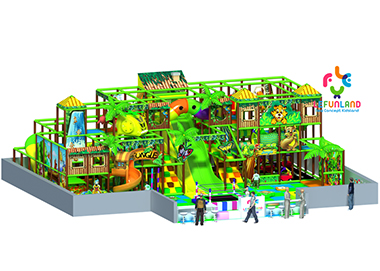
A multi-level soft play structure. The play experience sits on a steel frame the visitor never sees.
The steel frame is the skeleton. Every platform, every bridge, every anchor point loads back onto the vertical posts, and the posts do their job quietly for years until the day they do not. Wall thickness is where the money hides. A 40mm x 1.5mm tube and a 48mm x 2.2mm tube can wear the same powder coat and the same color, and to a buyer walking the floor they look the same. Under a decade of commercial traffic they behave differently.
Lefunland builds its commercial structures on 48mm x 2.2mm steel pipe. Industry-typical imported equipment runs closer to 40mm x 1.5mm, which is fine for residential and lighter-traffic use. The gap is 0.7mm of wall and 8mm of diameter. That reads like nothing on a spec sheet. It is the difference between a post that shrugs off a thousand kids a week and one that starts to flex where the platform bolts through. Flex leads to fatigue. Fatigue is what the operator is really buying against when they ask about steel.
Coating is the part everyone touches and nobody measures. It is also the layer standing between the steel and rust, hand oil, cleaning chemicals, and ten thousand small impacts a year. Thickness is measured in microns. Lefunland coats to 80+ microns. A lot of equipment on the market lands in the 40-60 micron range, which covers the metal and looks right on day one.
The thin coat chips at the high-contact edges first - the entry rails, the slide mouths, the spots small hands grab a hundred times a day. Once the coat is broken, moisture reaches the steel, and a rust bloom under paint is far more expensive to fix than to have prevented. Color retention tracks thickness too. Powder coating microns are one of the few material specs a buyer can have verified independently, which is part of why they belong on the quote in writing rather than in a sales-call adjective.
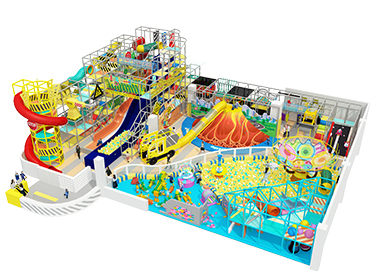
Coated steel posts and padded platforms on a themed structure. The coating is the layer every child touches.
Foam is the material a parent judges with one press of a thumb. It is the padding wrapped around posts, the soft edges on platforms, the cushioned surfaces in a toddler zone. Density is the number that matters, and it is measured in the mass packed into the foam. Lefunland uses 80-density EVA. Industry-typical foam sits around 40-50 density.
Lower-density foam feels close to the same when it is new. It compresses faster. After a year or two of constant traffic it takes a set - it stays dented, loses the springy resistance that made it protective, and the padding that was supposed to soften a fall has flattened into a thin skin over a hard core. Higher-density foam holds its shape and its cushioning far longer under the same load. Parents cannot read a density number. They can feel a post that has gone hard, and they draw conclusions about the whole facility from it.
The vinyl is the wear surface over the foam. It takes the scuffs, the cleaning, the fingernails, the occasional shoe that should not be on the equipment. Thickness is measured in millimeters. Lefunland uses 0.45mm PVC covering. A common alternative is 0.35mm. One tenth of a millimeter, again invisible on opening day.
Thinner vinyl splits at the seams and stress folds sooner, and a split cover is not cosmetic - torn PVC exposes foam, foam absorbs moisture and bacteria, and a hygiene problem turns into a replacement problem. Thicker covering resists the tear in the first place and cleans up without abrading. The cover is where the material story meets the operator's cleaning schedule, because a surface that holds up to daily disinfecting is a surface that stays in service.
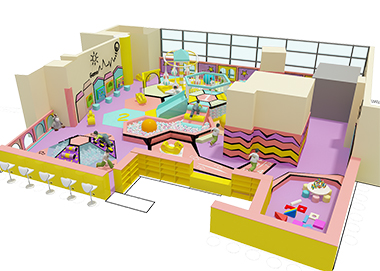
A toddler zone. Foam density and PVC gauge decide how this surface feels and holds up two years in.
Here is how the four headline specs compare, Lefunland against what an equipment buyer commonly sees quoted elsewhere.
| Material spec | Lefunland | Industry-typical |
|---|---|---|
| Steel pipe diameter x wall | 48mm x 2.2mm | 40mm x 1.5mm |
| Powder coating thickness | 80+ microns | 40-60 microns |
| EVA foam density | 80-density | 40-50 density |
| PVC covering thickness | 0.45mm | 0.35mm |
None of these four numbers changes the look of a structure. All four change how it ages. Equipment that holds up for seven years under full commercial traffic and equipment that holds up for three at half traffic are identical on the day the doors open. The gap shows up in the operator's P&L starting around month 24, when one facility is scheduling a refresh and the other is not.
A quote that lists "commercial-grade steel, high-density foam, durable PVC" has told you nothing measurable. The same three words cover a 40mm x 1.5mm frame and a 48mm x 2.2mm frame. Five numbers turn a marketing sentence into something you can compare across suppliers: steel tube diameter and wall thickness; powder coating microns; EVA foam density; PVC covering thickness; and the certificate numbers behind the safety claim, not the logos on the cover page.
There are material dimensions beyond the four headline ones - joint construction, whether structural connections are cast or welded, virgin versus recycled plastic blends in the molded parts, vinyl finish detail. Many factories mix material grade across components depending on where the stress and the wear fall, so a single line like "we use the best materials" usually describes part of a build rather than all of it. Those differences are easier to see at year two than at week one.
Lefunland has been manufacturing commercial indoor play equipment since 2009 - 16+ years - from a 70-acre factory, with 3,000+ projects delivered across 60+ countries. The material specs above are the standard build, not an upgrade tier: 48mm x 2.2mm steel, 80+ micron coating, 80-density EVA, 0.45mm PVC. Pricing starts from $10 per sq ft, which places the company at mid-range on price while running top-tier material specs - the value is in that ratio, not in being the cheapest line on a comparison sheet.
Two roles sit behind the numbers. Lefunland operates an SGS-authorized testing laboratory that can test and issue inspection reports for amusement equipment across the industry, and it serves as a principal drafting unit for China's national amusement equipment standards. The company that helps write the standards and runs the testing lab also makes the equipment. Certification is ASTM, EN1176, and IBC, and production runs on a 45-day lead time.
If you are comparing suppliers and want the four material specs written into the numbers - steel wall, coating microns, foam density, PVC gauge - reach out and we will put them on the page for your project. Email contact@lefunland.com or message us on WhatsApp at +8613605727866 to get a factory-direct quote and 3D design for your space.
Related reading: how to choose an indoor playground equipment manufacturer and the 2026 indoor playground equipment cost guide.
Copyright 2018-2026 © ShangHai Lefunland Children's Products Co.,Ltd. All Right Reserved
