



Starting an Indoor Playground in the UK: Regulations, Costs, and EN1176
A leisure operator near Leeds took over a 6,000 sq ft unit in a retail park last year and fitted it out as a soft play centre. Equipment landed in two containers from our factory, cleared customs at Felixstowe, and was installed in under four weeks. The part that took longest was not the build. It was the paperwork: change-of-use sign-off, a fire risk assessment, public liability cover, and confirmation that every play structure carried an EN1176 certificate. Anyone planning an indoor playground business in the UK runs into the same order of operations. The equipment is the easy half. The regulations, the certification, and the landed cost are where new operators lose weeks if they start blind.
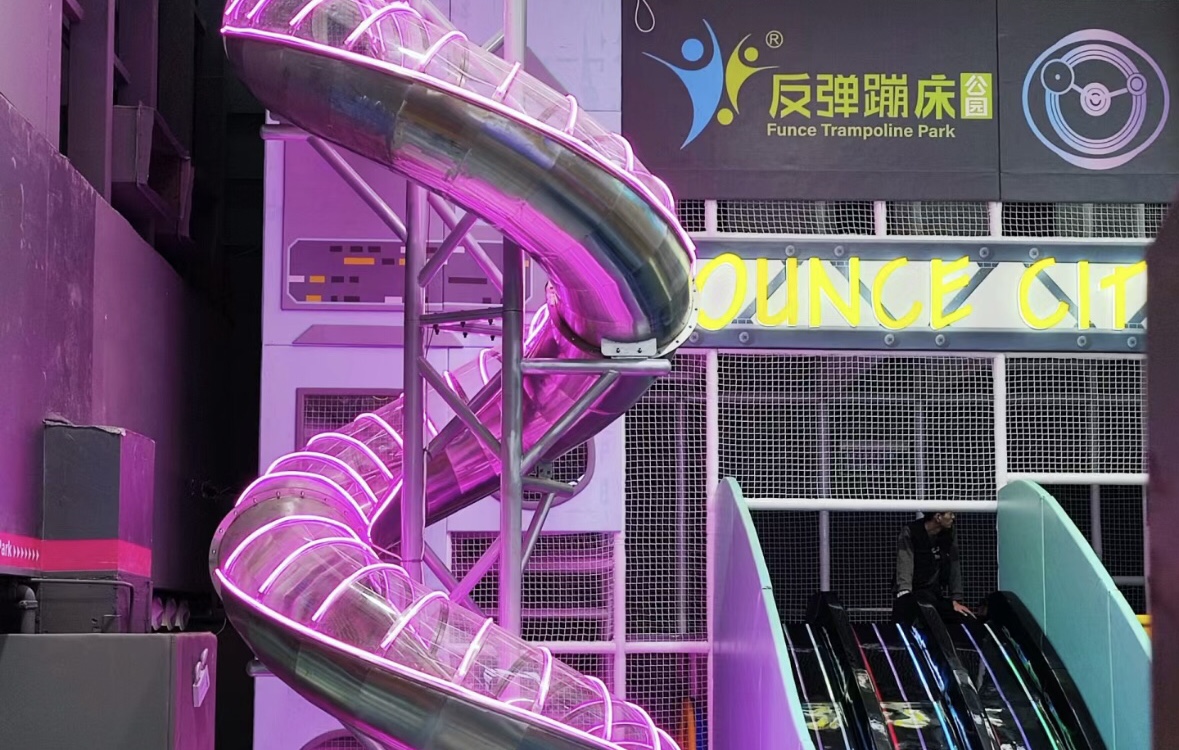
What an indoor playground business in the UK actually has to clear
There is no single licence that says "you may run a soft play centre." What you need is a stack of separate approvals, and which ones apply depends on your site and how you operate it.
Start with the building. Most indoor play centres in England and Wales sit in commercial use class E, which since 2020 covers a broad range of shops, offices, and indoor leisure. If the unit was already retail or leisure, a change of use may be straightforward. If it was a warehouse or industrial unit, you will likely need planning permission for the change, and that is worth confirming with the local planning authority before you sign a lease. Building regulations then govern the physical fit-out: means of escape, fire compartmentation, accessible toilets, ventilation. A fire risk assessment is a legal requirement once you occupy, and for a room full of foam and children it is the assessment your insurer will read closely.
Food changes the picture. Add a cafe and you register with the local authority's environmental health team and fall under food hygiene rating inspections. That registration is separate from anything to do with the play equipment.
Ofsted is the point that confuses people most. Standard supervised soft play, where parents or carers stay with their children, does not require Ofsted registration. Ofsted enters only if you offer unaccompanied childcare - drop-off sessions, a creche where you take responsibility for children while parents leave. Many UK operators deliberately design around parents staying on site precisely so they sit outside the childcare registration regime. It is a business-model decision, not a formality.
EN1176 and why the certificate number carries the weight
EN1176 is the European standard for playground equipment, and it remains the reference point for indoor play in the UK. It sets out requirements for structural integrity, impact-absorbing surfacing, entrapment gaps, fall heights, and the test methods behind each. A close companion, EN1177, covers the impact attenuation of the surfacing under free-height-of-fall zones. When an insurer, a landlord, or a local authority officer asks whether your equipment is safe, an EN1176 certificate is the document that answers.
The detail that matters: a certificate is tied to specific equipment and issued by a named body, and it carries a number you can check. A brochure that says "EN1176 compliant" in marketing copy is not the same thing as a certificate that names the structure, the standard clause, and the test report behind it. Lefunland equipment is EN1176 certified, and we also hold ASTM F1487 and IBC certification, so the same structure can satisfy a UK buyer and a US buyer without a redesign. We build to these standards because we help write them - the company operates an SGS-authorized testing laboratory and is a principal drafting unit for China's national amusement equipment standards. The lab that tests the frames and the factory that makes them are the same operation.
For a fuller breakdown of how EN1176 lines up against the American ASTM F1487 standard, and what each one actually checks, see our indoor playground safety standards guide.
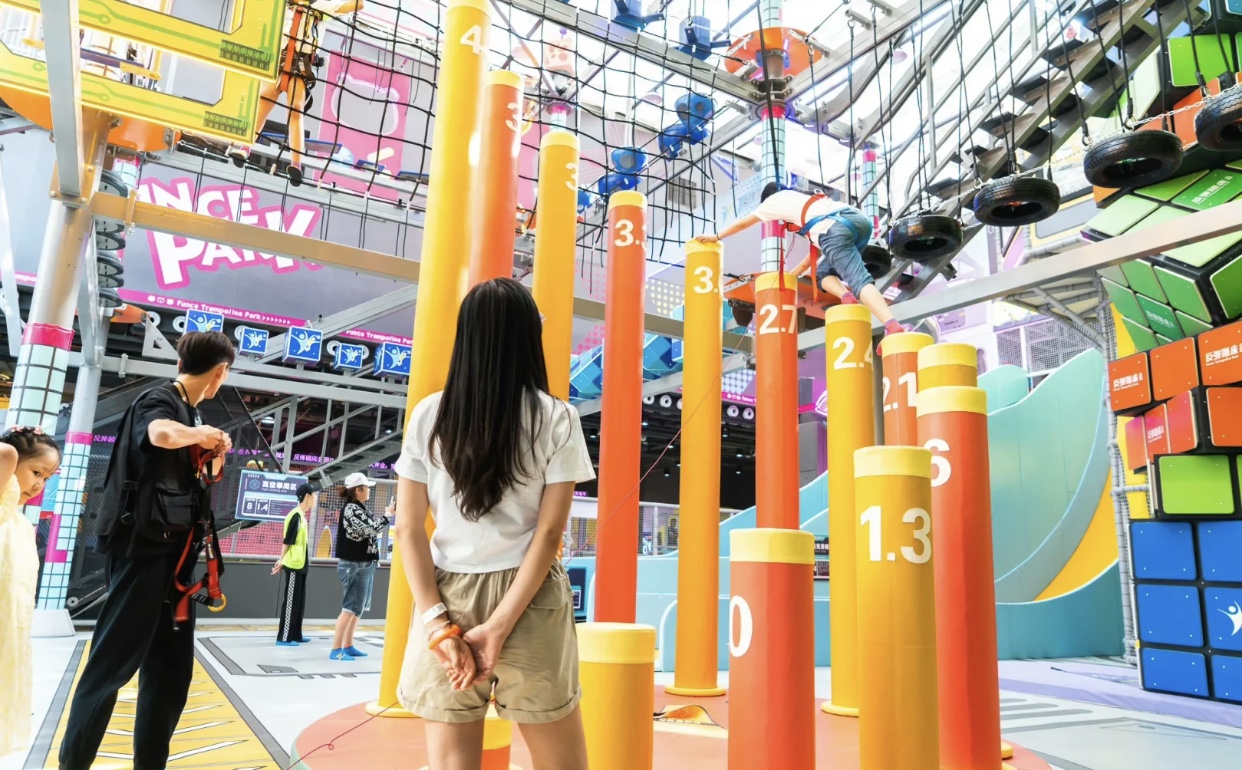
What an indoor playground business in the UK costs
Equipment is priced by floor area, and it is quoted factory-direct from $10 per sq ft for top-tier materials - typically the $10 to $15 range depending on how dense the layout is. Smaller units carry more structure per square foot and quote nearer the top of that band. Larger units leave 35 to 45 percent of the floor as walk zones, seating, and party rooms, so they quote nearer the bottom. In pound terms at recent exchange rates, that works out to roughly GBP 8 to GBP 12 per sq ft for the equipment alone.
The equipment brackets below are factory-direct and cover the play structures, not the UK build-out around them. Shopfitting, flooring, fire works, cafe fit, and professional fees sit on top and vary far too much by site to generalise.
| Site size | Equipment, factory-direct (USD) | Approx GBP |
|---|---|---|
| Small, under 5,000 sq ft | $15K - $75K | GBP 12K - 60K |
| Mid-size, 5,000 - 10,000 sq ft | $50K - $150K | GBP 40K - 118K |
| Large, 10,000+ sq ft | $100K - $300K+ | GBP 79K - 236K+ |
Two costs specific to UK importing belong in the plan from day one: ocean freight and duty. A mid-size order ships in one or two 40-foot containers, and UK import VAT plus any applicable duty is calculated on the landed value at the port. Those are recoverable or plannable, but only if they are in the model before you commit. Sequencing and the wider spend around the structure are covered in our indoor playground equipment cost guide.
Importing the equipment from China
Buying factory-direct is the normal route for the UK market. This is a custom industry - every centre is designed to a specific floor plate, and manufacturers sell direct to the operator rather than through a catalogue of stock units. That means the design stage matters as much as the price. You send dimensions and a rough concept, you get a 3D design back, and the layout is drawn to your unit before a single tube is cut.
Production runs on a 45-day lead time. Add three to five weeks of ocean freight to a UK port and clearance, and a realistic order-to-install window is roughly ten to twelve weeks. Lefunland has delivered 3,000+ projects across 60+ countries, the UK among them, so the export documentation, the container loading, and the EN1176 paperwork that UK customs and insurers expect are routine rather than a first attempt. The structures use commercial-grade materials throughout - 48mm x 2.2mm steel pipe, 80+ micron powder coating, 80-density EVA foam, and 0.45mm PVC covering - which is the specification that has to survive years of full-traffic use in a paying venue.
Talk to Lefunland
If you are scoping an indoor playground business in the UK and want a layout drawn to your unit with the EN1176 certification and landed cost mapped out, we are glad to help. Lefunland builds factory-direct from a 70-acre facility, with 16+ years in commercial manufacturing since 2009. Email contact@lefunland.com or reach us on WhatsApp at +8613605727866 to request a quote or get a factory-direct quote on your site.
