Contact Number: +86 4006234566




Fourteen parties on a Saturday. Three rooms, staggered 90-minute slots, two hosts working the rotation. That is an ordinary weekend for a 9,000 sq ft family entertainment center, and those fourteen bookings will usually out-earn the entire weekday admission line. Across the 3,000+ projects Lefunland has delivered in 60+ countries, indoor playground birthday party packages are the single most consistent revenue block on the floor - and the one most often priced by guesswork.
The guesswork is understandable. A party package looks like a bundle of small things: an hour of play, a room, some paper plates, a host. It is actually a scheduling product, and scheduling products live or die on slot yield.
Start with the floor. A party of 12 kids occupies play space that would otherwise sell as walk-in admission during your highest-demand hours. Weekend late morning through mid-afternoon is when open play sells itself. If your walk-in average is $14 per child and a party ties up roughly that headcount for 90 minutes, the party has to clear the displaced admission before it earns anything.
Then labor. A dedicated host for a 90-minute slot, plus setup and reset, is realistically two hours of paid time. Operators running parties without a dedicated host almost always report the same thing at the six-month mark: the reviews get worse and the rebooking rate collapses. The host is not overhead. The host is the product.
Consumables are the small number - tableware, a basic decoration set, wristbands, a goodie item if included. Most operations land somewhere between $3 and $6 per child depending on what the package promises. The trap is the food line, which is covered further down.
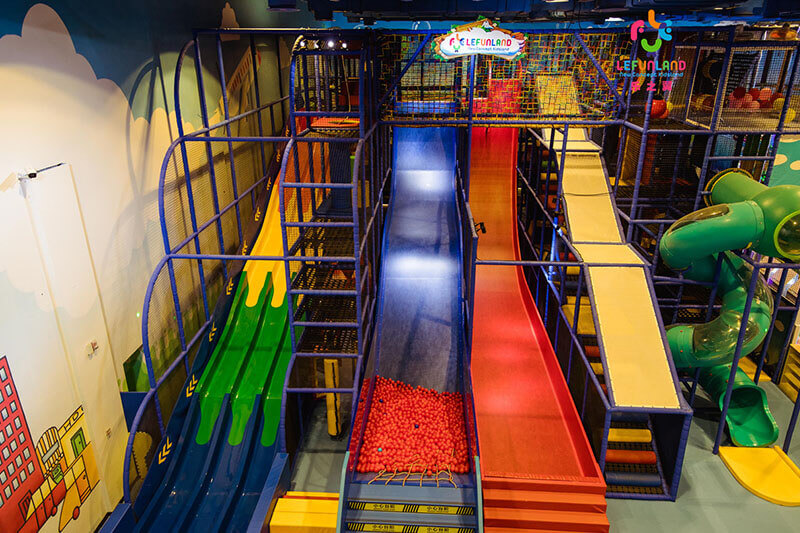
Party bookings compete with your highest-demand open-play hours, which is why slot yield decides the pricing.
Three tiers is the practical ceiling. Four confuses parents and slows the booking call; two leaves money on the table because the middle tier is where most families land and where the upsell path starts.
| Tier | Typical inclusion | Headcount | Common price band |
|---|---|---|---|
| Base | Play access, shared party table, 60-75 min, no host | 8-10 kids | $180-$280 |
| Standard | Private room, dedicated host, 90 min, basic decoration, invitations | 10-15 kids | $320-$480 |
| Premium | Private room, host, 2 hrs, themed decoration, food, dedicated attraction time | 15-20 kids | $550-$900 |
Per-child overage pricing matters more than the headline number. Set it at roughly your walk-in rate plus the consumable cost, and the guest list stops being a negotiation. Parents who bring four extra cousins pay for four extra cousins, and the host is not standing at the door doing arithmetic.
The base tier exists to be beaten. It should be genuinely usable and genuinely plain, so the standard tier reads as obvious value. Operators who make the base tier attractive end up selling it, and the base tier is the one that barely clears the displaced admission.
Party rooms get treated as leftover square footage - a wall thrown up in a corner after the play structure is placed. That decision shows up later in the booking calendar.
Sightlines are the first thing. Parents want to see the play area from the room, and a glazed or half-glazed wall lets one host cover both the table and the floor. Sound is the second. A room with hard parallel surfaces and no acoustic treatment turns 12 children into an experience adults leave early, and adults leaving early is the difference between a party and a rebooking.
Room adjacency to a signature attraction is worth planning at the layout stage rather than retrofitting. A room that opens onto the ball pool or the toddler zone can offer dedicated attraction time as a premium inclusion without moving the group across the building. That kind of adjacency is a floor-plan decision, and it is far cheaper to make it on a 3D layout than after the structure is anchored. Equipment budgets in this market start from $10 per sq ft, but the layout that decides whether party rooms scale costs nothing extra at design stage.
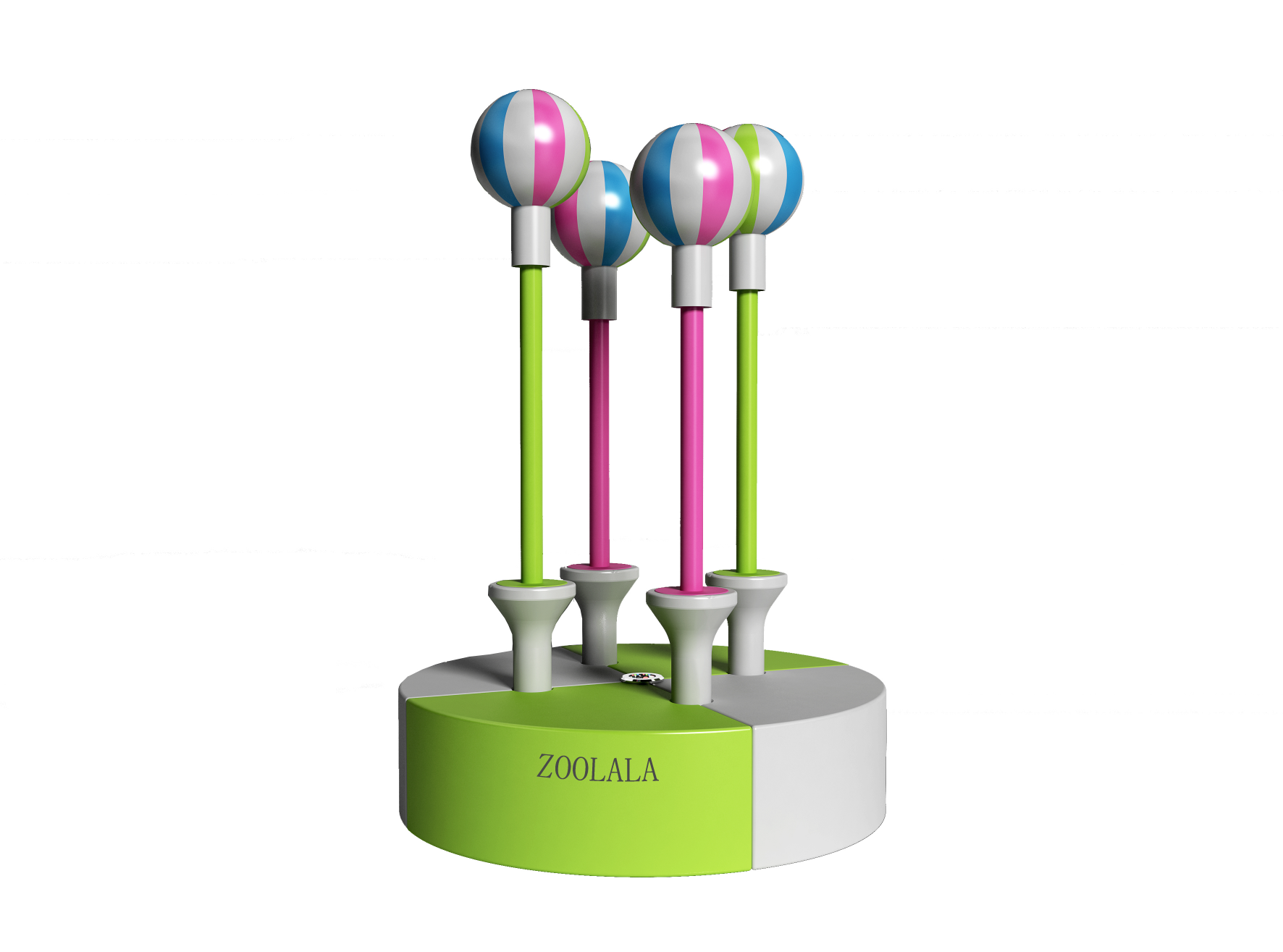
Soft play zones next to party rooms let a single host run the table and the attraction time without moving the group.
The package price is not the revenue. Total party revenue is package plus siblings plus adults plus the things sold in the last fifteen minutes.
Sibling admission is the largest and quietest line. A party of 12 invited children arrives with an average of four or five non-invited siblings, and every one of those is a full-price walk-in that nobody has to market to. Adult food and coffee is the second. Parents stay for 90 minutes; a decent coffee setup and a short adult menu turns waiting time into transactions.
Add-ons work best when they are decided at booking rather than on the day. Character appearances, extra 30-minute room extensions, a takeaway item for each guest, and pre-paid arcade or attraction credits all convert at higher rates when they appear as checkboxes on the booking form. Asked at the door, they read as a shakedown. Asked three weeks out, they read as planning.
One more line most operators underuse: the rebooking offer handed to the parent while the room is still decorated. A dated discount code given at pickup, valid for a booking made within 14 days, converts at rates no email campaign matches. Other revenue streams beyond admission stack on top of this without adding floor space.
Food is where party margin quietly disappears. Running a kitchen means licensing, staff, waste, and an inspection regime that has nothing to do with playground operations. Buying in from a local pizza or bakery partner means a lower gross margin per party but almost no fixed cost and no compliance burden.
Most facilities under 10,000 sq ft do better with the partnership model, and the ones that build kitchens usually do it after the party calendar is consistently full, not before. A third position exists - allow outside food but charge a room fee that reflects the floor time. It is less profitable per booking and it removes a large operational headache, which for a first-year operator is sometimes the right trade.
Phone-only booking caps a party business at whatever your front desk can handle during business hours. Parents plan birthdays at 10pm on a Tuesday. Online booking with real-time availability, a card-held deposit, and automatic confirmation removes the two failure points that cost the most: double-booked rooms and unrecovered no-shows.
A deposit of 25 to 50 percent, non-refundable inside seven days, is standard and rarely objected to. What varies is enforcement, and inconsistent enforcement is worse than a soft policy - it teaches repeat customers that the deadline is negotiable while first-timers pay it.
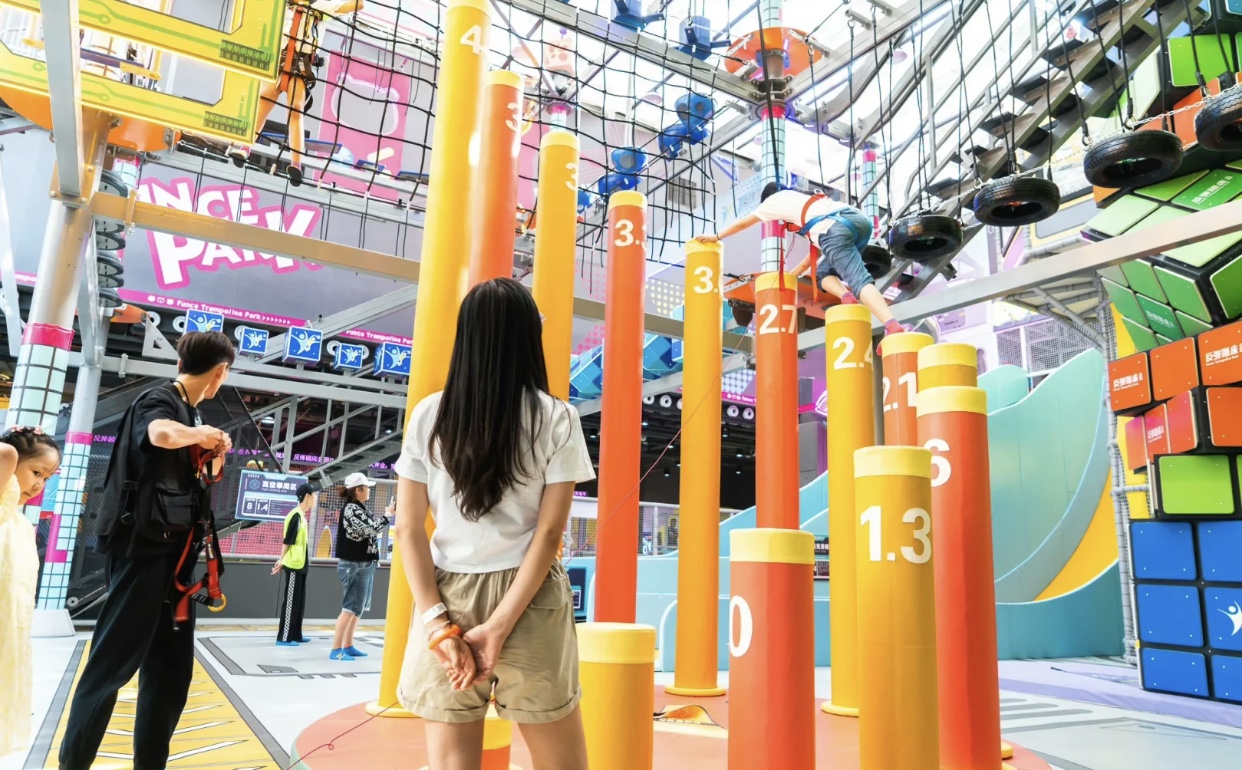
Party room placement relative to the main structure and the entrance affects how many slots a facility can run in parallel.
Slot capacity is a layout question before it is a staffing question. Two rooms sharing one corridor and one restroom cluster will bottleneck at changeover, no matter how good the host is. Three rooms with independent access and a staging area for arriving guests can run staggered starts every 30 minutes.
The other constraint is the entrance. Parties arrive as a clump of 15 people with gifts, shoes, and waiver forms. A facility that funnels that clump through the same counter serving walk-in admission will lose ten minutes off every slot and irritate both groups. Separating party check-in - even just a second table with a tablet - recovers that time. How the whole floor flows is worth reading alongside layout design and traffic flow planning, since the party calendar is downstream of both.
Facilities that treat parties as a scheduling product rather than an add-on service tend to hit 60 to 70 percent weekend slot utilization by month nine. The ones that treat it as something the front desk handles when asked rarely clear 30 percent.
Party room placement, attraction adjacency, and check-in flow are all decided at the layout stage, and they are difficult to change after installation. Lefunland has designed and manufactured equipment for 3,000+ indoor playground and FEC projects in 60+ countries since 2009, with commercial-grade specifications throughout: 48mm x 2.2mm steel, 80-density EVA foam, and 0.45mm PVC covering.
Send your floor dimensions and target party capacity and the design team will work the room placement into the 3D layout.
Copyright 2018-2026 © ShangHai Lefunland Children's Products Co.,Ltd. All Right Reserved
